Focused arrival windows
Useful updates and clear arrival timing.
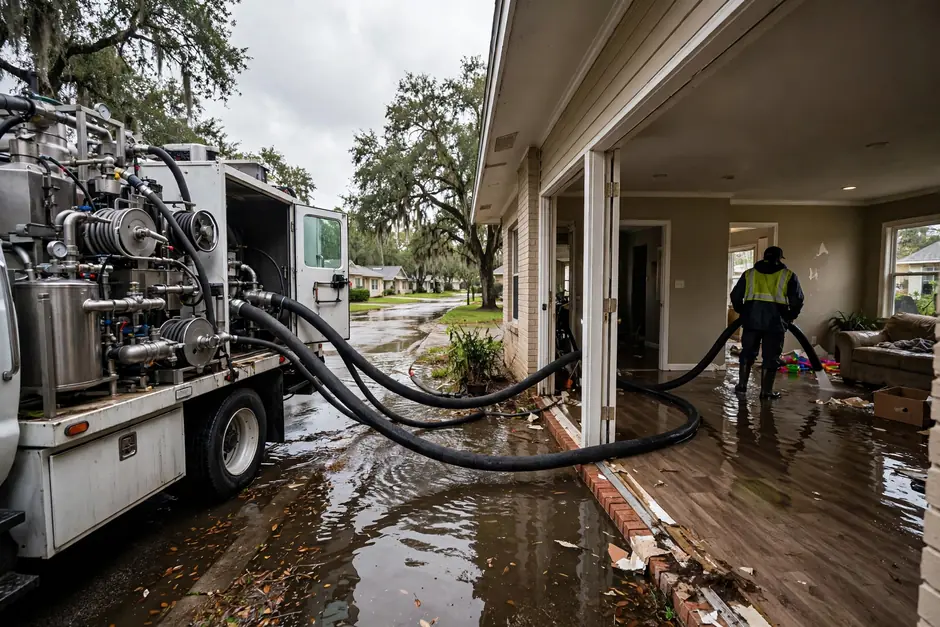
Water damage restoration Houston homeowners call for starts with one phone call to Restoration Enterprise at (346) 980-0009. We remove standing water, dry the structure with documented moisture readings, and repair what the water damaged — drywall, flooring, baseboards and trim. Our office is at 5250 Gulfton St Suite 3A, Houston, TX 77081, and we are open 24 hours, every day.
Useful updates and clear arrival timing.
Review the approach and written scope before deciding.
Equipped vehicles and respectful cleanup.
Neighbors serving neighbors with follow-through.
Every job starts with an assessment and a written scope. The inclusions below are standard on a typical residential water damage restoration in Houston. Work beyond the water-damaged area is quoted separately in writing before it starts.
We walk the property with a moisture meter and thermal imaging camera, map every wet zone, and give you a written scope and drying plan on the same visit.
Truck-mounted extraction units pull standing water from carpet, tile and hardwood. Saturated carpet and padding are removed when they cannot be dried in place.
Air movers and dehumidifiers run until daily moisture readings reach dry standard. You receive a documented drying report for your insurance carrier.
Affected framing and cavities are treated with an antimicrobial solution to reduce mold risk — important in Houston's humid climate, where clean water can degrade within 24 to 48 hours if left untreated.
Drywall, insulation, baseboards and flooring damaged by water are replaced as scoped. We prime, paint and reinstall trim so the room looks as it did before the loss.
Photos, moisture maps and an itemised written scope are packaged for your adjuster. We communicate with your carrier about the scope of the drying and repair work.
Share what is happening and receive a clear next step from the local team.
Water damage restoration in Houston is the process of removing standing water, drying the structure to documented moisture levels, and repairing what the water damaged — from drywall and insulation to hardwood flooring and baseboards. It is not a shop-vac job. We find water hiding behind walls and under tile with a moisture meter and thermal imaging, then run air movers and dehumidifiers until readings match dry-standard baselines. Every job is documented with moisture logs, which is what your adjuster needs to see.
Houston homes face water intrusion from every direction: slab leaks under the foundation, burst pipes in winter freeze snaps, roof leaks after a Gulf storm, and HVAC condensate overflow from attic air handlers. Because humidity here stays high most of the year, wet drywall and wood subfloor can support mold growth within 24 to 48 hours. That is why our Houston water damage restoration work starts with an assessment and a drying plan built for this climate, not a generic checklist.
Restoration Enterprise restores water damage. A plumber repairs the pipe, a roofer repairs the roof, and foundation repair is a separate trade — we restore the interior water damage those failures cause, and we work alongside the trade that fixes the source. Sewer-line repair is plumbing, not restoration. If a job needs a trade we do not perform, we say so in the written scope before work starts.
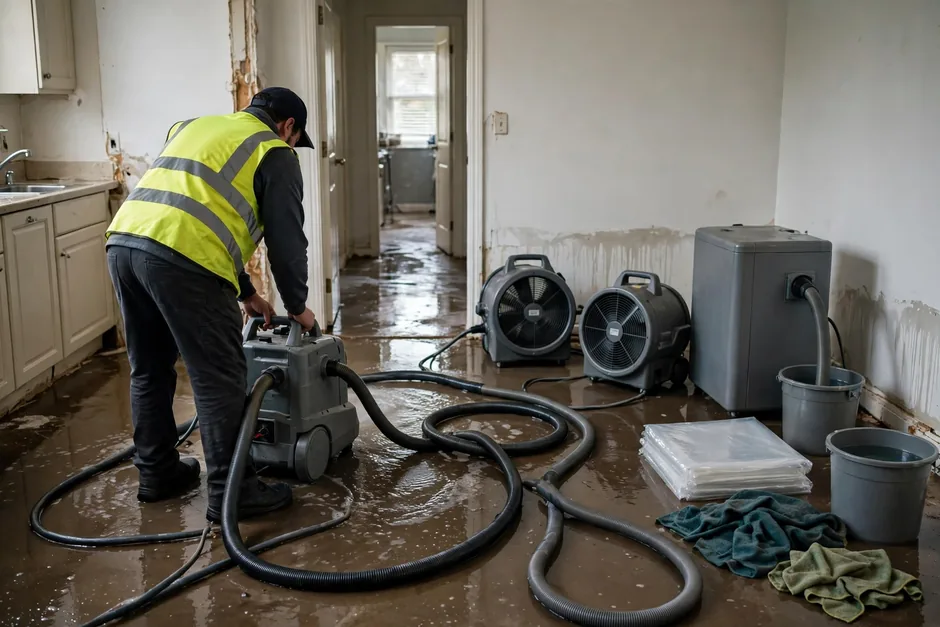
You call (346) 980-0009 and tell us where the water is coming from and how long it has been running. We ask whether the power is safe, then arrange a visit with extraction equipment.
We check the water source is stopped, then walk the property with a thermal imaging camera and moisture meter, mapping every wet zone, including behind baseboards and under flooring. You get a written scope and drying plan on the same visit.
Truck-mounted extraction units pull standing water from carpet, tile and hardwood. Saturated carpet and padding are removed when they cannot be dried in place.
Air movers and dehumidifiers are placed to the drying plan, and readings are checked on each visit. Drying time depends on the water category, the class of damage and the materials involved — we give you readings, not a promised number of days.
Once readings reach dry standard, we replace drywall, insulation, baseboards and flooring as scoped, prime and paint, and walk the job with you room by room. You receive the final moisture report before we leave.
Finds temperature differences that reveal hidden moisture behind walls, under floors and above ceilings without opening finishes.
Measures moisture in drywall, wood and concrete and tracks relative humidity, so we know when the structure has actually reached dry standard.
Pulls standing water and saturated moisture from carpet, padding and hard surfaces faster than portable units.
High-velocity air movers evaporate moisture from surfaces so dehumidifiers can remove it from the air.
Low-grain refrigerant dehumidifiers pull moisture from the air and keep humidity down while the structure dries.
Drying mats and directed airflow pull moisture from beneath hardwood flooring and from enclosed wall cavities without full demolition.
Filters airborne particles during mold remediation and Category 3 cleanup and helps keep the rest of the home protected.
During mold remediation and Category 3 work, affected areas are sealed off with plastic sheeting and barriers so dust does not migrate to clean rooms.
We extract the standing water, pull up saturated carpet and padding, dry the subfloor and adjacent drywall, and replace what cannot be saved. Documentation goes to your adjuster with the moisture report.
We inspect the attic, dry the ceiling cavity and insulation, and replace the damaged drywall after the roof is repaired by a roofer. The ceiling is repaired and repainted, and the attic is dry before we close it up.
We extract water, remove wet baseboards and drywall, dry the slab and framing with air movers and dehumidifiers, and treat affected areas with an antimicrobial solution.
We extract the carpet, remove saturated ceiling tiles, dry the ceiling grid and subfloor, and run HEPA air scrubbers while the work is under way. Documentation goes to the property manager.
Houston's climate and building stock shape how water damage plays out here. Humidity stays high most of the year, so wet drywall and wood subfloor can support mold growth within 24 to 48 hours. Summer thunderstorms and Gulf storms drive roof leaks and flooding, while winter freeze events burst pipes in homes with attic water lines. Much of the city is slab-on-grade, which hides moisture under flooring and makes slab leaks harder to spot without thermal imaging. If you need water damage restoration in Houston after a storm or a burst pipe, our crews work to this climate and this housing stock, not a generic national playbook.
Older bungalows, many pier-and-beam, where water can sit under the floor before it shows inside.
Homes near Brays Bayou with a history of street and bayou flooding; flood cuts and full dry-outs are common calls here.
Close to the Gulf and exposed to storm flooding and roof leaks, with many homes on slab foundations.
Larger homes with complex roof lines and several HVAC systems, where a condensate overflow can affect several rooms at once.
Our home base. Apartment buildings and townhomes where a leak in one unit can reach the units below.
Slows evaporation and raises mold risk, so we size dehumidifiers for Houston conditions and check readings on each visit.
Drive roof leaks, wind-driven rain and flooding, often needing tarping before extraction and drying can start.
Burst pipes in attics and exterior walls are a recurring call, and the damage is often larger because water runs unnoticed while homeowners are away.
Hides moisture under flooring and makes slab leaks harder to detect, which is why thermal imaging and moisture meters are standard on every assessment.
A supply line under a kitchen sink let go overnight, sending water across the kitchen, hallway and half the living room. Carpet was saturated, baseboards were wicking water, and the wood subfloor read high on the moisture meter.
We extracted standing water, removed saturated carpet and padding, dried the subfloor and drywall, and replaced baseboards and a section of drywall. Final moisture readings matched dry standard in every room.
Maintenance: We recommended braided stainless supply lines and a leak sensor under the sink.
A storm drove water through compromised roof flashing, staining the ceiling in a back bedroom and soaking the attic insulation above it. The stain had been growing for weeks before the homeowner called.
The roof was tarped by a roofer, the ceiling was opened and inspected, the cavity and framing were dried, and the insulation and drywall were replaced and the ceiling repainted. The moisture meter read dry before we closed it up.
Maintenance: We suggested a roof inspection before storm season and an attic check after heavy rain.
A blocked main line backed sewage into a ground-floor bathroom, soaking tile, baseboards and the bottom of the drywall. The area had to be treated as Category 3 water from the start.
We contained the bathroom, removed contaminated materials, disinfected surfaces, and dried the structure with negative air running. The bathroom was rebuilt and back in service.
Maintenance: We recommended a main-line camera inspection and asked the owner to talk to a plumber about a backwater valve.
Most calls fall into a handful of categories. Each one has a different urgency and a different repair path. Here is how we handle the most common ones.
A slab leak can quietly saturate the slab and subfloor, warping hardwood and pushing moisture into baseboards. We locate the moisture with thermal imaging and moisture meters, extract what has surfaced, and dry the affected flooring and walls. A plumber repairs the pipe; we handle the interior restoration.
A burst pipe can send a large volume of water into a home, soaking drywall, insulation and flooring. We extract standing water, remove saturated drywall and insulation, and set drying equipment on the first visit. Moisture logs document the dry-down for your insurance claim.
Water-stained ceilings and wet attic insulation often hide a bigger leak. We dry the attic and cavity and replace damaged drywall and insulation once the roof has been repaired. Framing is treated with an antimicrobial solution before we close it up.
Sewage is Category 3 water. Porous materials it touches usually cannot be saved. We contain the area, remove contaminated materials, disinfect surfaces, and dry the structure, with HEPA air scrubbers keeping the rest of the house protected.
Our technicians work to the process described in ANSI/IICRC S500, the industry standard for professional water damage restoration — an industry standard, not law. Decisions are based on documented moisture readings, not guesswork. We have dried slab leaks in River Oaks, storm-flooded homes in Clear Lake, and pier-and-beam homes in the Heights where water sat under the floor. Our scopes are written as itemised, insurance-ready documents your adjuster can follow.
Dealing with water damage is stressful, but Restoration Enterprise made the whole situation manageable. They were calm, knowledgeable, and reassuring from start to finish. I could finally breathe knowing my home was in good hands.
Exceptional Service Beyond Expectations! I am delighted to write this review for the highly professional and efficient water restoration company that turned our disaster into a blessing. When we discovered a serious plumbing issue in our kitchen, we were overwhelmed with anxiety and worry. However, the moment we reached out to them, they swiftly stepped in, assuaging our fears and promptly handling the situation. The thing that struck me the most about this company was their extraordinary customer service. They were not just professional, but also empathetic, understanding the stress we were under. They were quick to respond, arriving at our home within an hour of our call, fully equipped to deal with the situation. The cleanup process was swift and unobtrusive, causing minimal disruption to our daily routine. They even liaised with our insurance company, alleviating us from the added stress of handling paperwork. It's not often that you encounter a company so dedicated to their work and to the satisfaction of their clients. They turned an unfortunate event into a surprisingly positive experience. We are beyond pleased with the results and are grateful to have our kitchen back, in even better shape than before! If you are ever unfortunate enough to encounter a water disaster in your home, I wholeheartedly recommend this water restoration company. Their professionalism, efficiency, and dedication to customer satisfaction are second to none.
Rated 4.7 out of 5 from 152 Google reviews — 142 five-star reviews. The two reviews on this page are quoted verbatim from Google; the full set can be read on our Google profile.
There is no single figure. The scope depends on the water category, the class of damage, the area affected, the materials involved and how much has to be removed and replaced. We give you a clear written scope before work starts, so you can see exactly what is included.
It removes standing water, dries the structure to documented moisture levels, and repairs what the water damaged. In Houston that includes finding hidden moisture with thermal imaging, setting air movers and dehumidifiers, treating for mold risk, and writing an insurance-ready scope. Plumbing repairs the pipe and roofing repairs the roof — we restore the water damage.
In most cases, yes, if the affected area is contained and the power is safe. Small kitchen or bathroom leaks usually let you stay home while we dry. Jobs involving sewage backup or Category 3 water may mean staying elsewhere while the affected rooms are contained and dried. We tell you honestly on the first visit which situation you are in.
It depends on the water category, the class of damage, the materials and the size of the affected area. Extraction is the fastest step; structural drying takes longer, and repairs follow once readings reach dry standard. We give you moisture readings and a written scope after the assessment, not a promised number of days.
In general terms, a standard homeowners policy usually covers sudden and accidental water damage, such as a burst pipe, and usually excludes flood and gradual damage from poor maintenance. Flood insurance is a separate policy. What your policy covers depends on its own wording, so check it and talk to your insurer — we document the loss so your adjuster has what they need.
Not seeing your question? Our local team can help you understand urgency, scheduling and what to expect.
Ask the local teamStanding water comes out fast with truck-mounted extraction units, before it wicks into the subfloor.
View service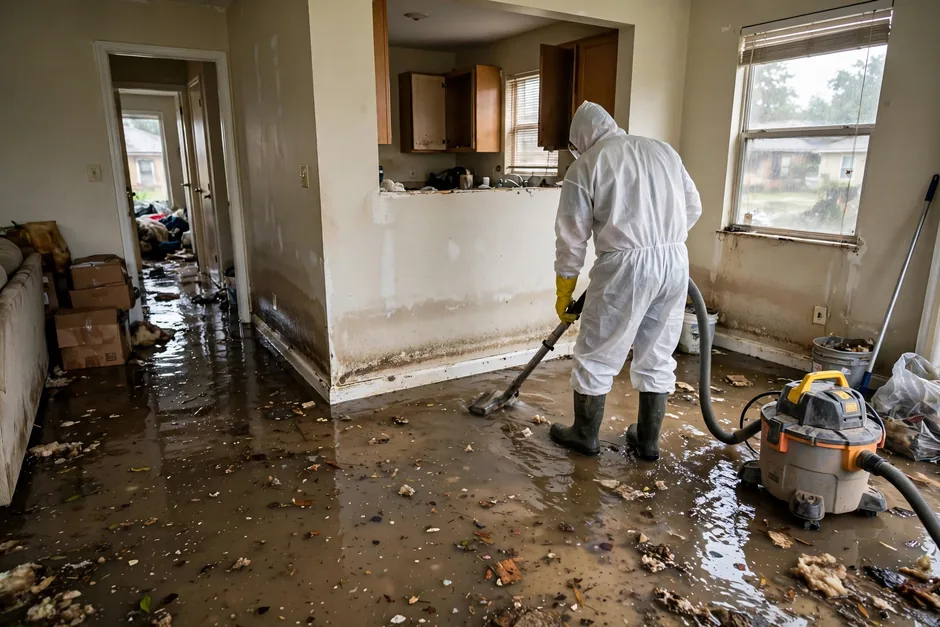
After bayou or street flooding, we handle Category 3 flood cleanup: extraction, removal, sanitizing and drying.
View service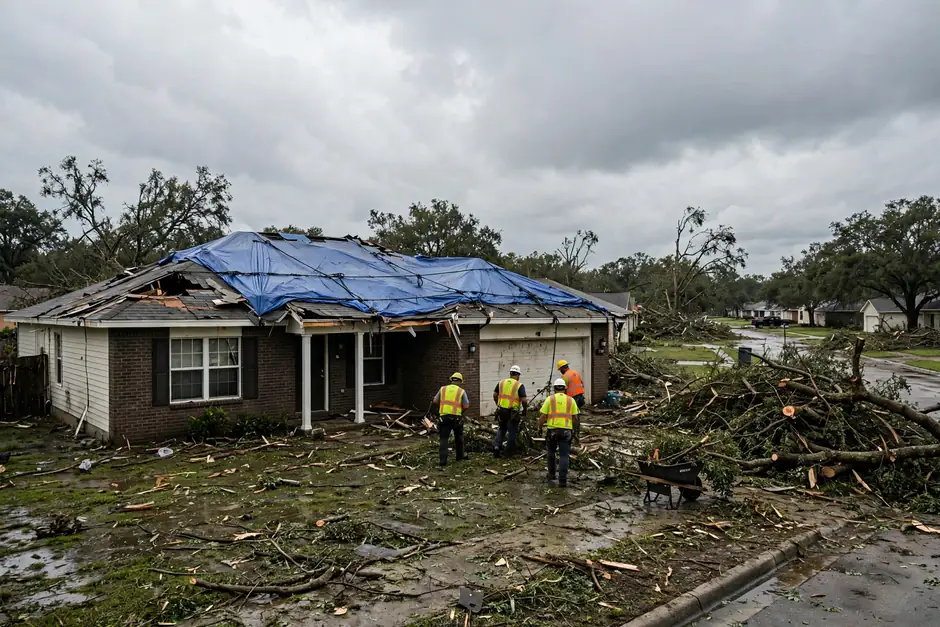
Roof leaks, wind-driven rain and storm flooding — we extract, dry and repair the interior water damage.
View service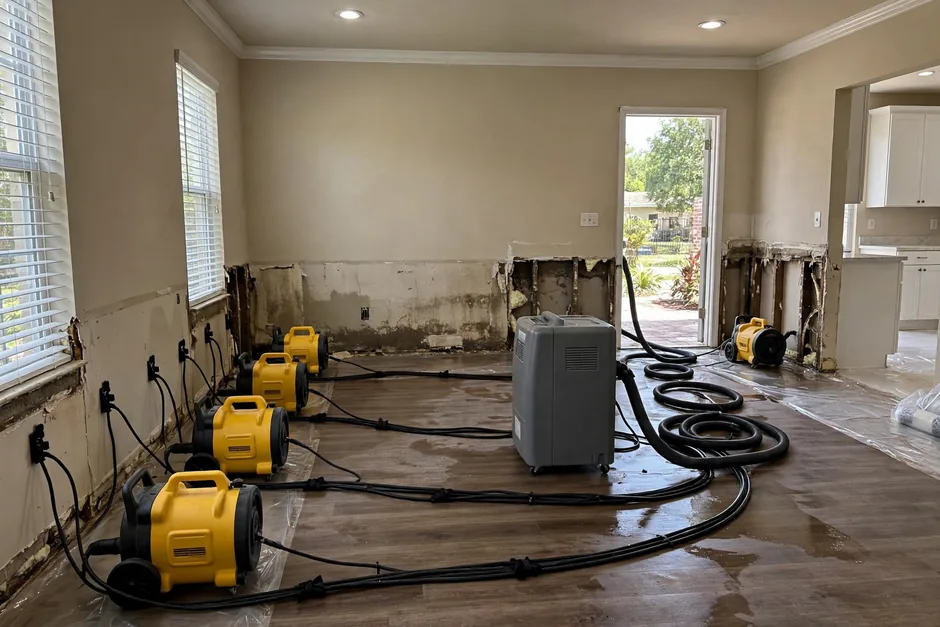
Air movers, dehumidification and moisture mapping until readings reach dry standard.
View serviceWe answer the phone around the clock, including weekends and holidays. Tell us what happened and where you are, and we will give you a clear next step. Phone is our contact channel — call (346) 980-0009.