Focused arrival windows
Useful updates and clear arrival timing.
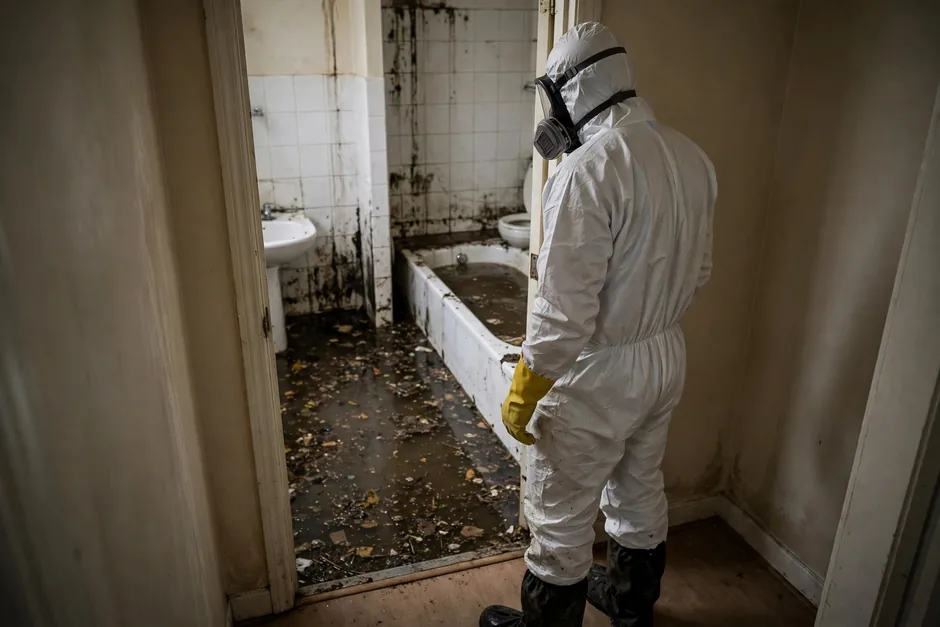
Sewage backup cleanup Houston homeowners need when a drain backs up is Category 3 work — grossly unsanitary water that carries bacteria and pathogens. Do not enter the affected area, do not use the fixtures, and keep children and pets away. Restoration Enterprise contains the area, removes contaminated material, sanitizes surfaces and dries the structure. Call (346) 980-0009 — open 24 hours.
Useful updates and clear arrival timing.
Review the approach and written scope before deciding.
Equipped vehicles and respectful cleanup.
Neighbors serving neighbors with follow-through.
Sewage cleanup is safety-first work. Every step below is standard on a sewage job in Houston. Repair of the sewer line itself is plumbing, not restoration — and is quoted separately by a plumber.
Do not enter the affected area, do not use the fixtures, and keep children and pets away. We check that power is safe before any work starts.
The affected area is sealed off with plastic sheeting and barriers, and negative air is used so contamination does not travel to clean rooms.
Pumps and extraction units remove the standing sewage water, with protective equipment worn throughout.
Porous materials touched by Category 3 water — carpet, padding, wet drywall and insulation — are removed, because they cannot be dried back to a safe condition in place.
Exposed framing, subfloor and hard surfaces are cleaned and sanitized after the water and contaminated material are out.
Air movers and dehumidifiers dry the structure, with moisture readings logged on each visit. Photos and an itemised written scope go to your adjuster.
Share what is happening and receive a clear next step from the local team.
Sewage backup cleanup in Houston means dealing with Category 3 water — grossly unsanitary water from a sewer backup or a toilet overflow containing faecal matter. It carries bacteria and pathogens, and porous materials it touches usually cannot be saved. The job is containment first, then extraction, then removal of what the water touched, then sanitizing, then drying. It is not a DIY job, and it is not a mop-and-bucket job.
A toilet overflow without faecal matter is Category 2 gray water, and is handled as part of water extraction. Once faecal matter is involved — or the water has contacted the ground or sewage — it is Category 3. Ground surface water is Category 3 for the same reason, which is why floodwater is handled the same way. The category of a specific loss is determined on site, not from a web page, and the crew treats the water as Category 3 from the first visit.
Sewer-line repair is plumbing, not restoration. We clean up the sewage, remove what it contaminated, sanitize and dry the structure — a plumber repairs the sewer line itself. Foundation repair is a separate trade, and roofing repairs the roof. If a job needs a trade we do not perform, we say so in the written scope before work starts, and we work alongside the trade that fixes the source.
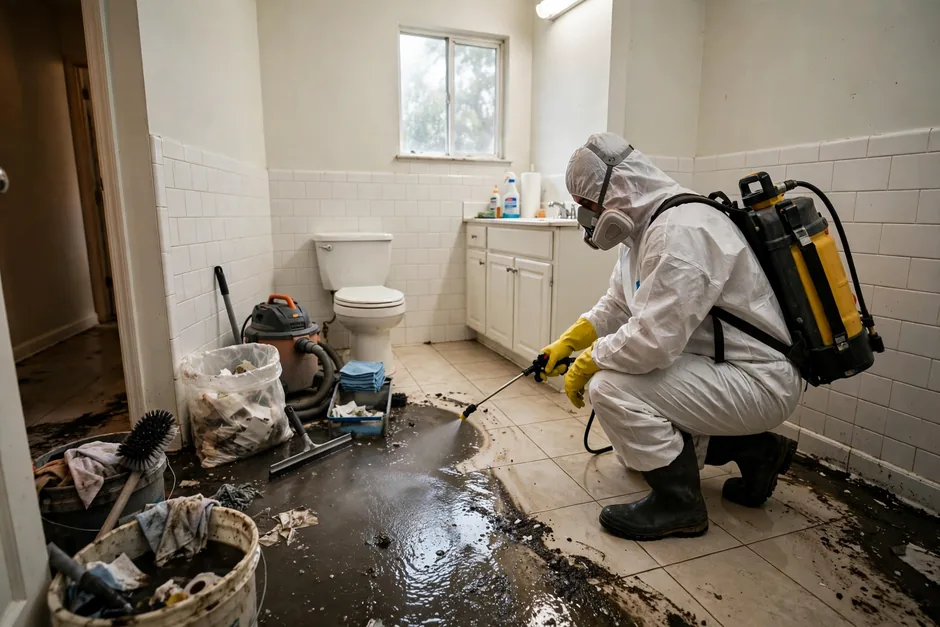
Call (346) 980-0009 and tell us what backed up and where. We tell you to stay out of the affected area, not to use the fixtures, and to keep children and pets away, then arrange a visit.
We check that power is safe and map how far the sewage water traveled, with a moisture meter and thermal imaging, and give you a written scope on the same visit.
The affected area is sealed off and negative air is set. Pumps and extraction units remove the standing sewage water.
Porous materials touched by the water are removed. Exposed framing, subfloor and hard surfaces are cleaned and sanitized.
Air movers and dehumidifiers dry the structure, with readings checked on each visit. Once dry, damaged drywall, flooring and trim are replaced as scoped — and a plumber repairs the sewer line.
Respirators, gloves, boots and coveralls appropriate to Category 3 work, worn for the whole job.
Submersible pumps and extraction units remove standing sewage water from floors and from under flooring.
Affected areas are sealed off with plastic sheeting and barriers so contamination does not migrate to clean rooms.
Filters airborne particles and maintains containment pressure during sewage cleanup.
Framing, subfloor and hard surfaces are cleaned and sanitized after the water and contaminated material are out.
Maps how far the sewage water traveled behind walls and under floors, so nothing wet is missed.
High-velocity air movers evaporate moisture from surfaces so dehumidifiers can remove it from the air.
Low-grain refrigerant dehumidifiers pull moisture from the air and keep humidity down while the structure dries.
We contain the bathroom, extract the sewage water, remove the contaminated tile base, drywall and insulation, disinfect the surfaces, and dry the structure. A plumber clears and repairs the main line.
This is Category 3 water. We contain the bathroom and hallway, extract the water, remove the contaminated carpet and padding and the wet section of drywall, and sanitize and dry what remains.
We contain both units, extract the water, remove what the sewage touched in each, sanitize the framing and subfloor, and dry both spaces with readings logged per room.
Sewage mixed with storm water is Category 3. We extract it, remove the contaminated flooring and lower drywall, sanitize the slab and framing, and dry the room before any repair is scoped.
Houston's clay soils shift with the seasons — swelling when wet, shrinking when dry — and that movement pulls joints apart and bends drain lines out of alignment. Older homes commonly have cast-iron drain lines under the slab, and heavy rain can surcharge sewers that are already carrying storm water. In apartment buildings, a backup in one unit can reach the units below within hours. Whatever the cause, the cleanup is the same: stay out, contain it, extract it, remove what it touched, sanitize and dry.
Apartment buildings where a backup in one unit can reach the units below, and ground-floor units take the water first.
Slab-on-grade ranch homes with older cast-iron drain lines, where a main-line blockage backs up into the lowest bathroom.
Older homes with ageing drain lines, where a blockage can back sewage into a ground-floor bath or kitchen.
Homes near Brays Bayou where heavy rain can surcharge sewers and push water back into ground-floor rooms.
Larger homes with several bathrooms, where a main-line blockage can back up into more than one fixture at once.
High-density attached housing, where a backup can migrate vertically between floors and into the units below.
Puts drain lines under the slab, where shifting clay can bend them out of alignment and cause blockages.
Houston sits on Beaumont Formation clay that swells when wet and shrinks when dry, pulling joints apart and cracking drain lines.
Can surcharge sewers already carrying storm water, pushing sewage back into ground-floor fixtures.
A blocked main line backed sewage into a ground-floor bathroom, soaking tile, baseboards and the bottom of the drywall. The area had to be treated as Category 3 water from the start.
We contained the bathroom, extracted the sewage water, removed the contaminated materials, disinfected the surfaces, and dried the structure with negative air running. A plumber cleared and repaired the main line.
Maintenance: We recommended a main-line camera inspection and asked the owner to talk to a plumber about a backwater valve.
A toilet overflowed with faecal matter and soaked the bathroom floor and the hallway carpet. The family had already kept the children out of the rooms.
We contained the bathroom and hallway, extracted the water, removed the contaminated carpet and padding and the wet section of drywall, and sanitized and dried what remained.
Maintenance: We suggested the owner ask a plumber to check the toilet fill and flush mechanism.
A sewer backup in an upstairs apartment reached the unit below, staining the ceiling and soaking the carpet. Two homes needed cleanup from one blockage.
We contained both units, extracted the water, removed what the sewage touched in each, sanitized the framing and subfloor, and dried both spaces with readings logged per room.
Maintenance: We recommended the property manager ask a plumber to camera the shared main line.
Most sewage calls are a backup in the lowest bathroom or a toilet overflow. The source decides the trade; the cleanup is the same. Here is how we handle the most common ones.
A blocked main line backs sewage into the lowest fixture. We contain the room, extract the water, remove what it touched, and sanitize and dry the structure. A plumber clears and repairs the line.
This is Category 3 water. We contain the area, extract the water, remove contaminated carpet, padding and drywall, and sanitize and dry what remains.
A backup in one unit can reach the units below. We contain each affected unit, extract the water, remove what the sewage touched, and dry each space with readings logged per room.
Heavy rain can surcharge sewers and push sewage water back into ground-floor rooms. We treat it as Category 3, extract it, remove what it touched, sanitize and dry.
Our sewage work follows the process described in ANSI/IICRC S500, the industry standard for professional water damage restoration — an industry standard, not law. Category 3 water gets containment, protective equipment, removal of what it touched, sanitizing and documented drying. We know the clay soils that shift Houston's drain lines, the older cast-iron lines under slabs, and what local adjusters expect in a sewage file — and we are clear about the boundary: sewer-line repair is plumbing, not restoration.
Dealing with water damage is stressful, but Restoration Enterprise made the whole situation manageable. They were calm, knowledgeable, and reassuring from start to finish. I could finally breathe knowing my home was in good hands.
Exceptional Service Beyond Expectations! I am delighted to write this review for the highly professional and efficient water restoration company that turned our disaster into a blessing. When we discovered a serious plumbing issue in our kitchen, we were overwhelmed with anxiety and worry. However, the moment we reached out to them, they swiftly stepped in, assuaging our fears and promptly handling the situation. The thing that struck me the most about this company was their extraordinary customer service. They were not just professional, but also empathetic, understanding the stress we were under. They were quick to respond, arriving at our home within an hour of our call, fully equipped to deal with the situation. The cleanup process was swift and unobtrusive, causing minimal disruption to our daily routine. They even liaised with our insurance company, alleviating us from the added stress of handling paperwork. It's not often that you encounter a company so dedicated to their work and to the satisfaction of their clients. They turned an unfortunate event into a surprisingly positive experience. We are beyond pleased with the results and are grateful to have our kitchen back, in even better shape than before! If you are ever unfortunate enough to encounter a water disaster in your home, I wholeheartedly recommend this water restoration company. Their professionalism, efficiency, and dedication to customer satisfaction are second to none.
Rated 4.7 out of 5 from 152 Google reviews — 142 five-star reviews. The two reviews on this page are quoted verbatim from Google; the full set can be read on our Google profile.
Stay out of the affected area, do not use the fixtures, and keep children and pets away. Do not try to mop it up or flush the toilet again. Call (346) 980-0009 — we are open 24 hours — and we will tell you what to do next.
No. Sewage water is Category 3 — grossly unsanitary — and porous materials it touches cannot be made safe by drying them in place. Cleanup needs containment, protective equipment, removal of contaminated material, sanitizing and documented drying.
No. Sewer-line repair is plumbing, not restoration. We clean up the sewage, remove what it contaminated, sanitize and dry the structure. A plumber repairs the sewer line itself, and we work alongside them.
Porous materials touched by Category 3 water are removed: carpet and padding, wet drywall and insulation, and any other porous material the sewage reached. Hard surfaces — tile, framing, subfloor — are cleaned and sanitized and can usually be kept.
In general terms, it depends on your policy — some homeowners policies cover sewer backup, some exclude it, and some offer it as an add-on. What your policy covers depends on its own wording, so check it and talk to your insurer. We document the loss so your adjuster has what they need.
Not seeing your question? Our local team can help you understand urgency, scheduling and what to expect.
Ask the local team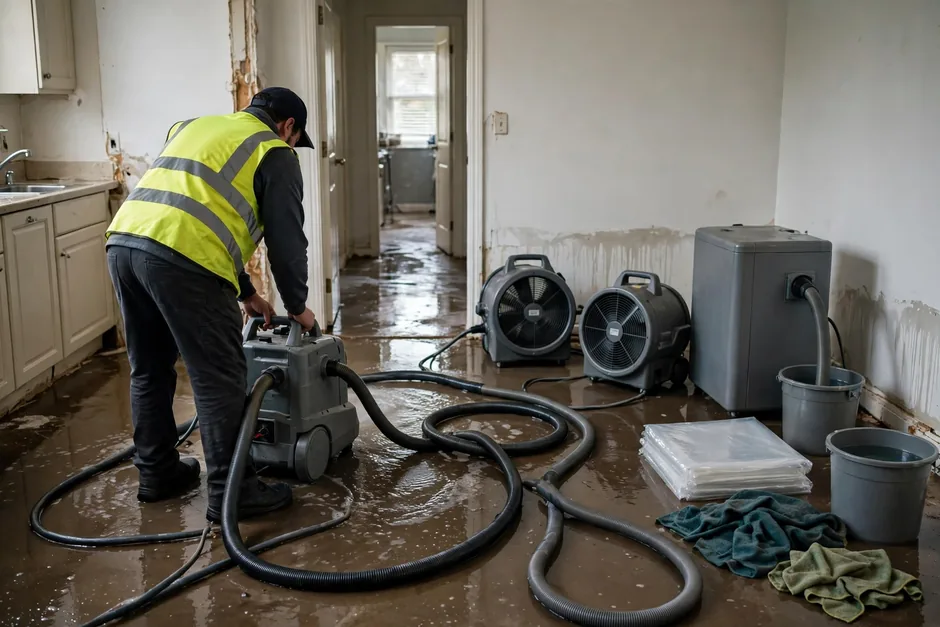
The flagship service: extraction, structural drying and repair for any water loss in Houston.
View service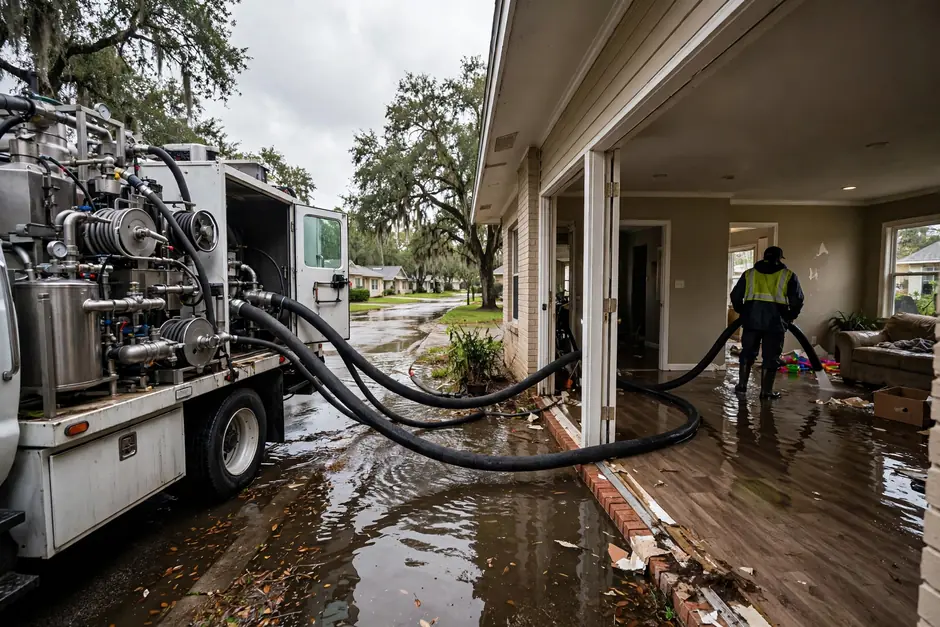
Standing water comes out first with pumps and truck-mounted extraction units.
View service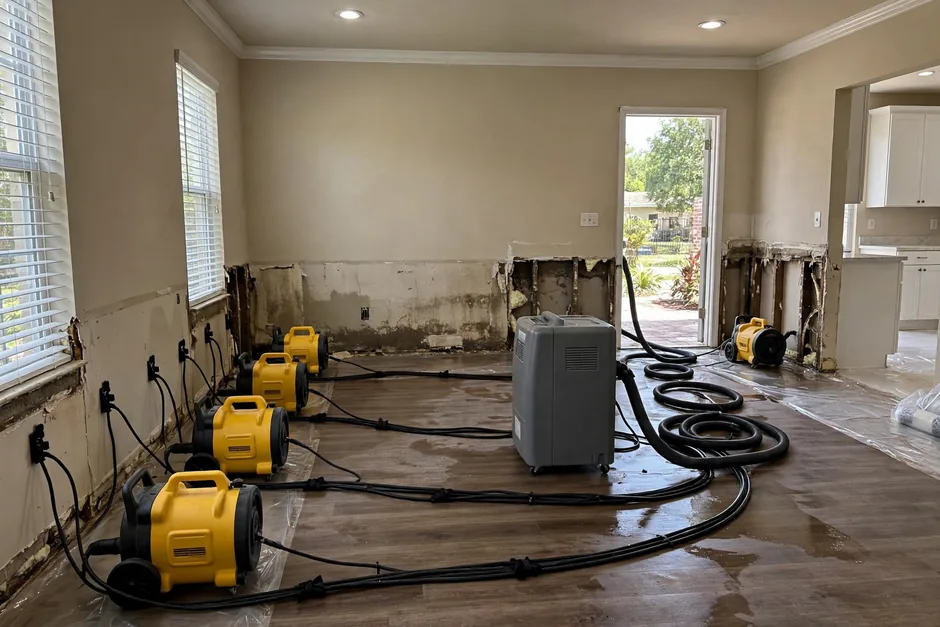
After cleanup, air movers and dehumidification dry the structure to documented readings.
View service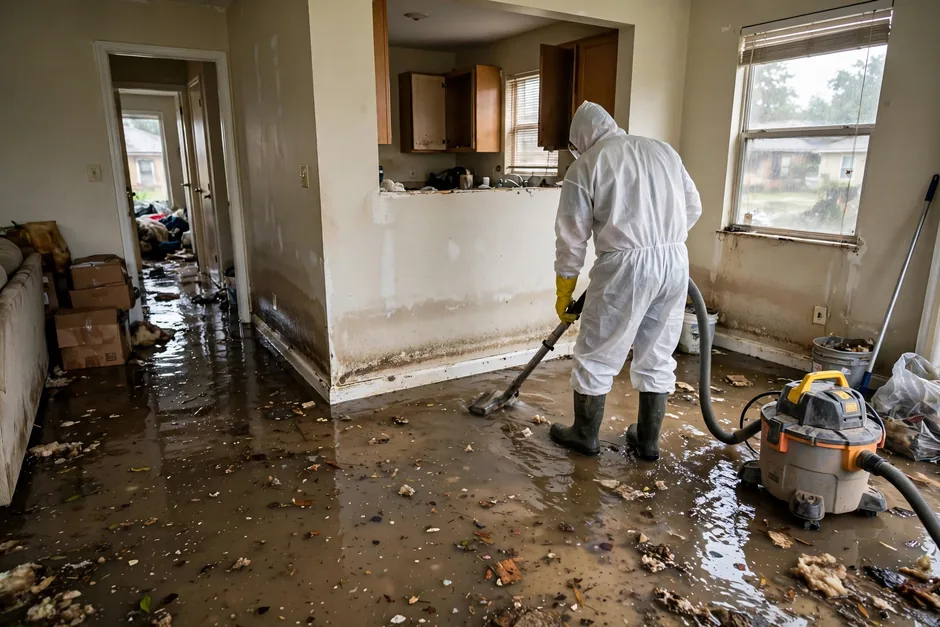
Floodwater is Category 3 too — extraction, removal, sanitizing and drying after rising water.
View serviceWe answer the phone around the clock, including weekends and holidays. Tell us what backed up and where, and we will give you a clear next step. Phone is our contact channel — call (346) 980-0009.