Focused arrival windows
Useful updates and clear arrival timing.
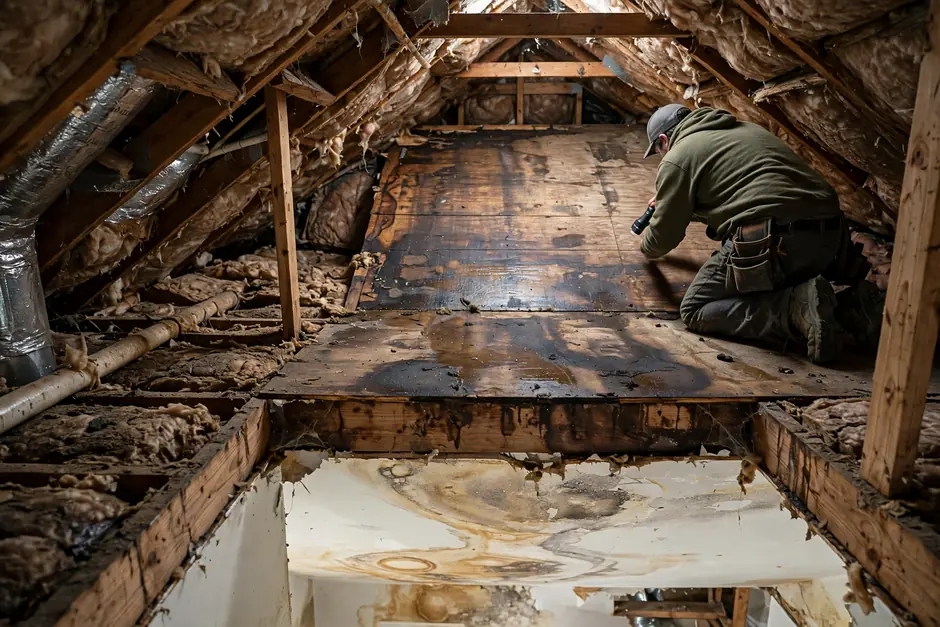
Roof leak water damage repair Houston homeowners notice as a stain on the ceiling usually started weeks earlier, where rain found its way through flashing, a vent, or a damaged shingle and soaked the attic insulation above. By the time the stain appears, the cavity is often wet through. Restoration Enterprise dries the ceiling and attic, checks the framing and insulation, and repairs the interior materials the water damaged. Call (346) 980-0009 any time — we are open 24 hours.
Useful updates and clear arrival timing.
Review the approach and scope before deciding.
Equipped vehicles and respectful cleanup.
Neighbors serving neighbors with follow-through.
A roof leak is two jobs: stopping the water at the roof and dealing with everything the water did inside. We handle the interior job — the water damage — from inspection through repair.
We inspect the ceiling and attic with a moisture meter and borescope camera, finding how far the water traveled through insulation and framing before anything is opened.
Wet ceiling sections are opened where the cavity needs air, and the framing and insulation are dried to documented moisture readings.
Soaked insulation is removed where it cannot be dried, since wet insulation holds moisture against framing and loses its function.
Exposed framing and cavities are treated with an antimicrobial solution to reduce the chance of mold while the structure dries.
Readings are logged from the first visit until materials reach dry standard, so you have a clear record of what was wet and when it dried.
Drywall, insulation, baseboards and paint damaged by the water are replaced as scoped once the structure is dry, then finished to match the room.
Share what is happening and receive a clear next step from the local team.
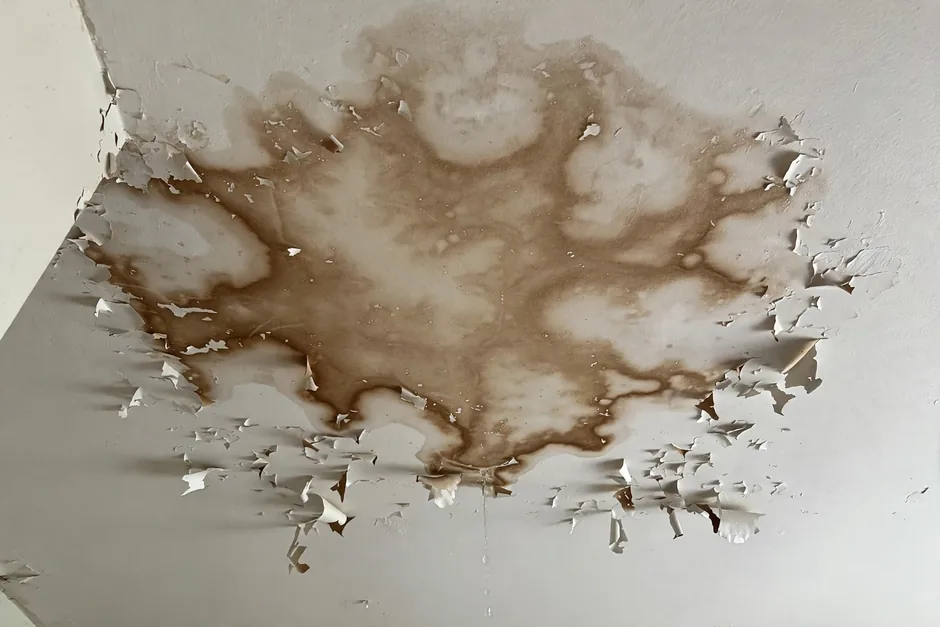
Roof leak water damage Houston homes suffer is usually a slow loss, not a sudden one. Rain finds a path through flashing, a pipe boot, a vent, or a shingle lifted by wind, then travels along the roof deck and drips into the attic insulation. Insulation soaks it up quietly, the ceiling drywall below takes on moisture over days or weeks, and the first thing the homeowner sees is a stain that keeps growing. Left alone, the attic grows mold and the ceiling drywall eventually fails. The water is usually Category 1 rainwater at entry, but it can degrade within a day or two once it sits in building materials.
The attic is where the story is. Houston attics hold air handlers and ductwork as well as insulation, so a roof leak and an HVAC condensate overflow can look alike from below — and an attic-run supply line can leak in the same space for a different reason again. We check the attic before deciding what the water is and where it came from, and we say plainly when the answer needs a roofer rather than a restorer. The chain runs forward: emergency water extraction removes standing water where the leak has pooled, structural drying brings the ceiling cavity and framing back to dry standard, and mold remediation is arranged where the water sat long enough for mold to establish. The water damage restoration page describes that full sequence, and the storm damage restoration page covers wind-driven rain after a storm.
Scope boundary: a roofing contractor repairs the roof — we restore the interior water damage. We do not repair roofs, replace shingles or flashing, or present ourselves as a roofing company. Where the roof is open, we coordinate tarping so no more rain gets in while the interior dries.
You call (346) 980-0009 and tell us where the stain or drip is and when it started. We explain what to watch for — a sagging ceiling, water near light fixtures — and arrange a visit.
We inspect the ceiling and attic with a moisture meter and borescope camera, mapping how far the water traveled through insulation and framing and checking whether the roof needs tarping.
Standing water is extracted where the leak has pooled, and wet ceiling sections are opened where the cavity needs air. Soaked insulation is removed where it cannot be dried.
Air movers and dehumidifiers dry the ceiling cavity, framing and subfloor, with readings logged in writing. Antimicrobial treatment is applied to exposed framing before drying.
Once readings are at dry standard, damaged drywall, insulation and paint are replaced as scoped. We walk the job with you and hand over the final moisture report.
Lets us look inside ceiling cavities and the attic to confirm hidden water and check that drying is complete before closing up.
Measures moisture content in drywall, insulation, framing and air so we know when materials have actually reached dry standard.
Finds temperature differences that reveal hidden water above ceilings and under attic insulation.
Pulls standing water where a leak has pooled on a floor or in a ceiling cavity.
Move air across wet surfaces and pull moisture from the air so ceiling cavities and framing can dry.
Filters airborne particles during drying and remediation work, keeping dust out of clean rooms.
Plastic sheeting and barriers seal off the work zone so dust stays out of the rest of the home while ceilings are open.
Exposed framing and cavities are treated after extraction to reduce the chance of mold while the structure dries.
Cover open roof sections so no more rain enters while the interior dries, coordinated where the roof is damaged.
ANSI/IICRC S500 is the published industry standard for water damage restoration, covering water categories, drying goals and documentation. It is an industry standard, not law, and we describe our work against it rather than claiming certification to it.
We inspect the attic, find the entry point, dry the ceiling cavity and insulation, and replace the damaged drywall and paint after the roof is repaired. The ceiling is checked with a moisture meter before it is closed up.
We treat this as urgent: power to the fixture is off, the ceiling cavity is checked, and the water is extracted. A sagging ceiling or water near electrics is not a wait-and-see problem.
We extract the water, dry the ceiling cavity and insulation, and check the framing. The condensate overflow is a Category 2 gray-water source, so porous materials it soaked are handled accordingly.
Thermal imaging maps the wet zone above the stain, we open the affected section, dry the cavity and framing, and replace the damaged drywall once readings are at dry standard.
Houston roofs work hard: Gulf storms drive rain sideways, summer sun ages shingles and flashing, and complex rooflines on larger homes give rain more places to enter. The interior damage that follows is usually found in the attic first.
Larger homes with complex rooflines and multiple HVAC systems, where a leak can affect several rooms at once.
Older bungalows where ageing flashing and vents are the usual entries, and where attic insulation can hide a leak for weeks.
Older homes with varied rooflines, where a slow leak around a vent or flashing stains ceilings over months.
Rebuilt and older homes alike, where storm-driven rain through the roof is the usual roof-leak call.
Wooded lots where falling branches damage shingles and flashing, and where attic leaks follow storm seasons.
Larger homes with long roof runs, where a single entry can soak insulation across a wide attic area.
Ranch homes with straightforward rooflines, where pipe boots and vents are the usual entries.
Rain driven sideways by storm wind finds entries that vertical rain never reaches, which is why leaks often appear only after a storm.
Houston attics commonly hold air handlers, so a condensate overflow can look like a roof leak from below — we check the attic before deciding.
A storm drove water through compromised flashing, staining the ceiling in a back bedroom and soaking the attic insulation above it. The stain had been growing for weeks before the call.
We inspected the attic, opened the ceiling to check the cavity, dried the framing and insulation, and replaced the damaged drywall and paint. The moisture meter read dry before we closed it up.
Maintenance: We suggested a roof check before storm season and a look in the attic after heavy rain, which catches small leaks before they reach the ceiling.
Water dripped from a ceiling light fixture during heavy rain. The ceiling below was sagging and the insulation above was soaked.
We confirmed the power was off, extracted the water, opened the wet ceiling section, dried the cavity and framing, and replaced the drywall and paint once readings were at dry standard.
Maintenance: We recommended checking ceilings after every heavy rain and calling at the first drip from a fixture, since water near electrics is not a wait-and-see problem.
A slow leak around a roof vent stained a hallway ceiling over weeks. The stain was small, but the insulation above it was soaked through.
Thermal imaging mapped the wet zone above the stain, we opened the affected section, dried the cavity and framing, and replaced the damaged drywall once readings were at dry standard.
Maintenance: We suggested an annual check of pipe boots and flashing, which are the entries most slow leaks use.
Roof leaks show up in a few recognizable ways. Each one needs the attic checked before the interior is scoped.
A stain that grows after rain points to an active entry above it. We check the attic, dry the cavity and replace the damaged ceiling materials.
Water near a light fixture or ceiling fan is urgent. We confirm the power is off, extract the water and dry the cavity.
Soaked insulation holds moisture against framing. We remove what cannot be dried and dry the framing to documented readings.
Wind-driven rain finds entries vertical rain never reaches. We coordinate tarping, dry the interior and repair the ceiling damage.
An attic air handler overflow can stain the ceiling below just like a roof leak. We check the attic to tell the two apart before scoping the work.
A roof leak is an interior problem with an exterior cause, and the two halves belong to different trades. Our work is the interior half: finding how far the water traveled, drying the ceiling and attic to documented readings, and repairing what the water damaged.
Dealing with water damage is stressful, but Restoration Enterprise made the whole situation manageable. They were calm, knowledgeable, and reassuring from start to finish. I could finally breathe knowing my home was in good hands.
Exceptional Service Beyond Expectations! I am delighted to write this review for the highly professional and efficient water restoration company that turned our disaster into a blessing. When we discovered a serious plumbing issue in our kitchen, we were overwhelmed with anxiety and worry. However, the moment we reached out to them, they swiftly stepped in, assuaging our fears and promptly handling the situation. The thing that struck me the most about this company was their extraordinary customer service. They were not just professional, but also empathetic, understanding the stress we were under. They were quick to respond, arriving at our home within an hour of our call, fully equipped to deal with the situation. The cleanup process was swift and unobtrusive, causing minimal disruption to our daily routine. They even liaised with our insurance company, alleviating us from the added stress of handling paperwork. It's not often that you encounter a company so dedicated to their work and to the satisfaction of their clients. They turned an unfortunate event into a surprisingly positive experience. We are beyond pleased with the results and are grateful to have our kitchen back, in even better shape than before! If you are ever unfortunate enough to encounter a water disaster in your home, I wholeheartedly recommend this water restoration company. Their professionalism, efficiency, and dedication to customer satisfaction are second to none.
Across all 152 Google reviews, Restoration Enterprise holds a 4.7-star average: 142 five-star reviews and 10 one-star reviews. That aggregate rating is the full picture — the two reviews shown here are the only individual reviews quoted on this site.
It can be. If water is dripping from a light fixture or ceiling fan, or the ceiling is sagging, turn off power to that room if it is safe to do so and call (346) 980-0009. A sagging ceiling can give way, and water near electrics is not a wait-and-see problem. A small stain with no drip is still worth a prompt inspection, since the insulation above it may already be soaked.
No. A roofing contractor repairs the roof — we restore the interior water damage. We dry the ceiling and attic, check the framing and insulation, and repair the drywall, insulation and paint the water damaged. Where the roof is open, we coordinate tarping so no more rain gets in while the interior dries.
Because the insulation above the ceiling can hold water long after the rain stops, and it keeps feeding moisture into the drywall below. A stain that grows between rains usually means the cavity above it is still wet. We check the attic with a moisture meter rather than judging by the stain alone.
We check the attic. A roof leak leaves a trail from the roof deck through the insulation, while a condensate overflow leaves water around the air handler and its drain. Houston attics commonly hold air handlers, so the two are confused often. The drying is similar, but the trade that fixes the cause is different.
In general terms, a standard homeowners policy usually covers sudden and accidental water damage, while gradual leaks and wear-and-tear damage are usually excluded, and the roof repair itself is often treated differently from the interior water damage. What a specific policy covers depends on that policy, so check with your insurer. Our insurance claim page explains the documentation that is usually asked for.
Not seeing your question? Our local team can help you understand urgency, scheduling and what to expect.
Ask the local team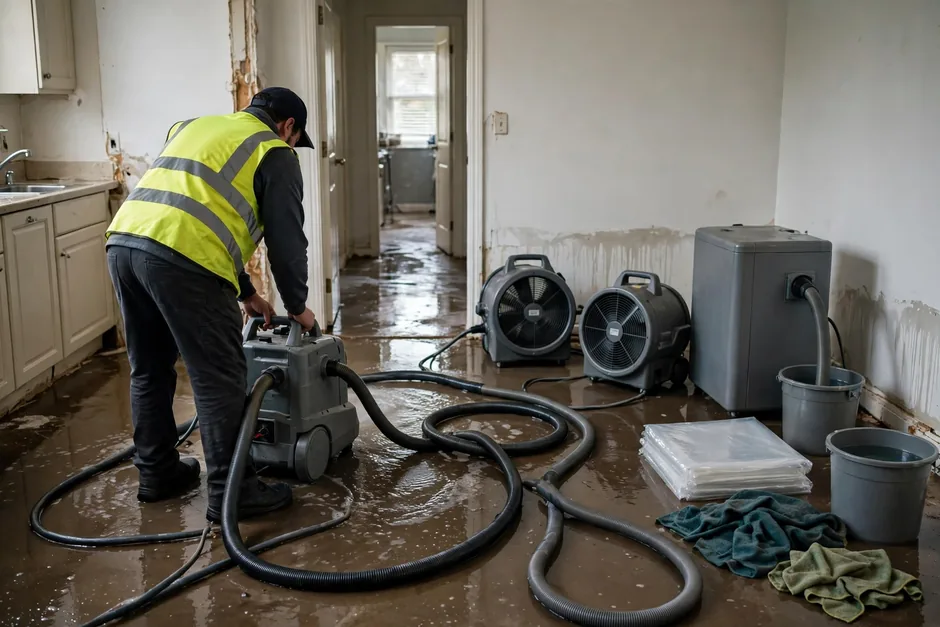
Roof leak drying is step one; full water damage restoration covers the drying and the repair of ceilings, insulation and paint once the structure is dry.
View service
Where a storm opened the roof, the storm page covers the full response — tarping, extraction and drying together.
View service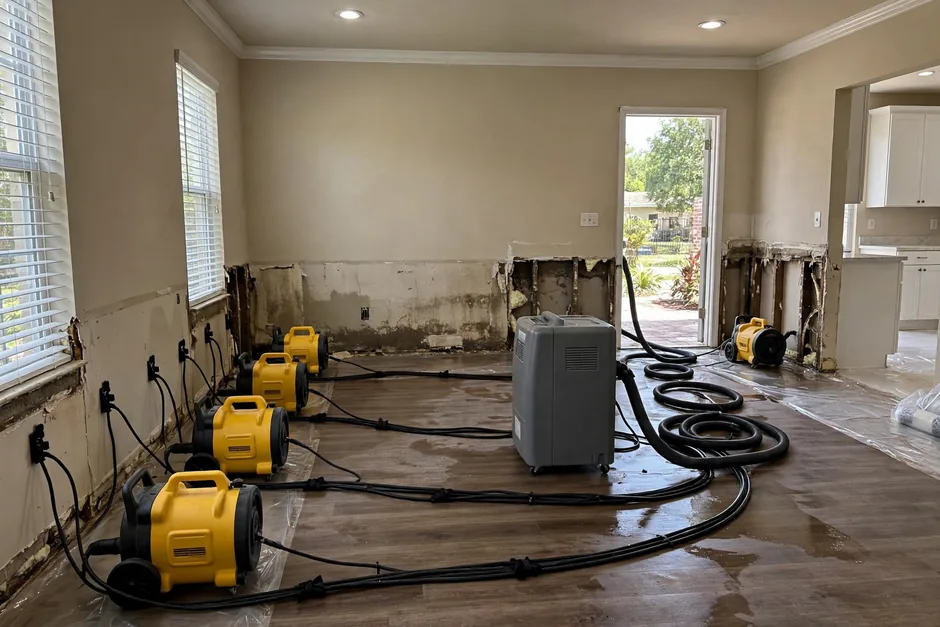
After a roof leak, air movers and dehumidifiers dry the ceiling cavity, framing and insulation, with readings logged in writing.
View service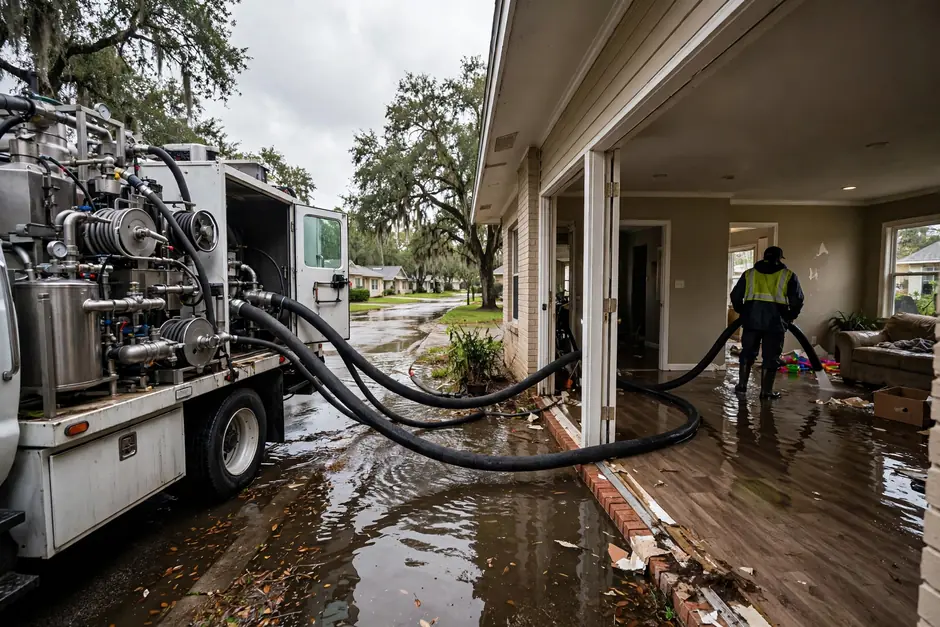
Standing water where a leak has pooled is removed with truck-mounted extraction units before drying begins.
View serviceWe answer the phone around the clock, including weekends and holidays. Tell us what happened and where you are, and we will give you a clear next step. Phone is our contact channel.