Focused arrival windows
Useful updates and clear arrival timing.
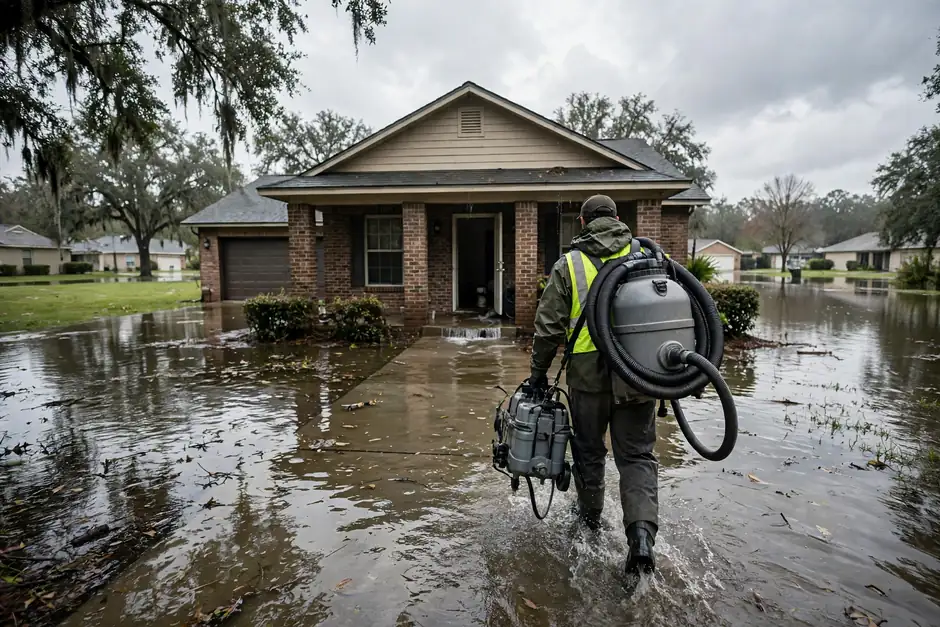
Flood damage cleanup Houston homeowners need after bayou or street flooding starts with safe, contained cleanup. Floodwater is Category 3 water — grossly unsanitary — because it carries watershed runoff and sewer overflow. Restoration Enterprise extracts the water, removes porous materials that cannot be saved, sanitizes what remains and dries the structure with documented readings. Call (346) 980-0009 — we are open 24 hours.
Useful updates and clear arrival timing.
Review the approach and written scope before deciding.
Equipped vehicles and respectful cleanup.
Neighbors serving neighbors with follow-through.
Flood cleanup is not a mop-and-bucket job. Every step below is standard on a flood job in Houston. Rebuild work beyond the flood-damaged area is quoted separately in writing.
We check that power is safe and the structure is safe to enter before any work starts. If it is not safe, we say so and do not proceed.
Pumps and truck-mounted extraction units remove standing floodwater from floors, and from under flooring where it has traveled.
Porous materials touched by Category 3 floodwater — wet drywall, insulation, carpet and padding — are removed, because they cannot be dried back to a safe condition in place.
Exposed framing, subfloor and hard surfaces are cleaned and sanitized after the water and damaged material are out.
Air movers and dehumidifiers dry the structure, with moisture readings logged on each visit until dry standard is reached.
Photos, moisture maps and an itemised written scope are packaged for your adjuster, including the flood-damage record your insurer will ask for.
Share what is happening and receive a clear next step from the local team.
Flood damage repair in Houston means dealing with water that came from outside — bayou and street flooding, storm runoff, or water that entered at ground level. All Houston bayou and street floodwater is Category 3 water, grossly unsanitary, because it carries watershed runoff and sewer overflow. That changes the job: porous materials it touches are removed rather than dried in place, surfaces are sanitized, and the work is contained so contamination does not spread through the home.
Hurricane Harvey in 2017 flooded 154,170 homes in Harris County, and 68% of them were outside the 100-year floodplain — a reminder that a flood map line is not a guarantee. Houston's flat terrain, bayou network and heavy-rain storms mean flooding can reach streets and homes that have never flooded before. Our flood work follows the same chain as every water job — extraction, then drying, then mold assessment where the window has passed — with Category 3 handling throughout.
If your home is in the floodplain and the repair to pre-damage condition costs $10,000 or more, the City of Houston Floodplain Management Office requires a floodplain development permit to start flood-damage repair — check with the FMO for your address. Emergency extraction and drying are mitigation, not the rebuild; the rebuild is where permits apply. And the boundary holds here too: a plumber repairs the pipe, a roofer repairs the roof, and foundation repair is a separate trade — we restore the flood damage inside the home.
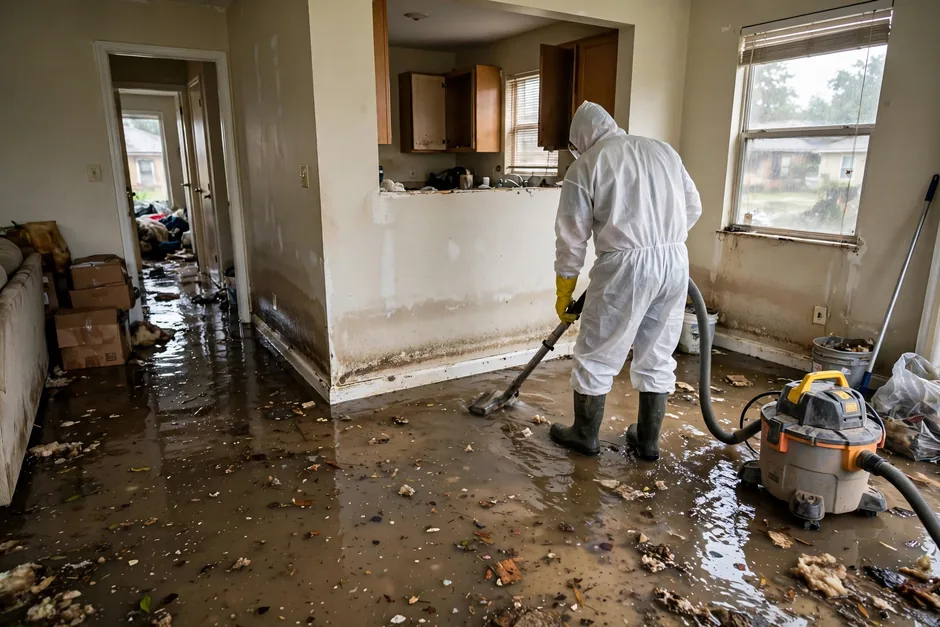
Call (346) 980-0009 and tell us how the water got in and how deep it is. We ask whether the power is safe and whether anyone has been in the water, then arrange a visit.
We map how far the water traveled — including behind baseboards and under flooring — with a moisture meter and thermal imaging, and give you a written scope on the same visit.
Pumps and extraction units remove the standing water. Porous materials touched by floodwater are cut out and removed.
Exposed surfaces are cleaned and sanitized, then air movers and dehumidifiers dry the structure, with readings checked on each visit.
If the water-damage window has passed, mold is assessed — by a separate licensed assessor, never by the company that will remediate the same job. Once the structure is dry, damaged drywall, flooring and trim are replaced as scoped.
Submersible pumps and truck-mounted extraction units remove standing floodwater from floors and from under flooring.
Maps how far floodwater traveled behind walls and under floors, so nothing wet is missed.
Flood cuts are made at a measured height so only the wet section of drywall and insulation is removed.
Framing, subfloor and hard surfaces are cleaned and sanitized after the water and damaged material are out.
High-velocity air movers evaporate moisture from surfaces so dehumidifiers can remove it from the air.
Low-grain refrigerant dehumidifiers pull moisture from the air and keep humidity down while the structure dries.
Filters airborne particles during Category 3 cleanup and helps keep the rest of the home protected.
Affected areas are sealed off with plastic sheeting and barriers so contaminated dust does not migrate to clean rooms.
Water came in at ground level and stood several inches deep across the ground floor. We extracted it, cut out wet drywall and insulation, sanitized the framing and dried the slab and walls. Documentation went to the insurer with the moisture report.
Floodwater entered through doorways and low vents. We extracted the water, removed carpet and padding and the lower section of drywall, sanitized the exposed framing and set drying equipment until readings reached dry standard.
Runoff pooled against the slab and entered under the doors. We extracted the water, removed the wet flooring and baseboards, and dried the slab and wall cavities before any repair was scoped.
Water entered the ground floor and soaked carpet, drywall and furniture. We extracted it, removed what Category 3 water had touched, sanitized the structure and dried it with documented readings.
Houston floods differently from most American cities. The land is flat, the bayous carry the runoff, and a slow-moving storm can drop far more rain than a fast hurricane. Harvey flooded 154,170 homes in Harris County, 68% of them outside the 100-year floodplain. That history is why our flood pages never state a flood-zone status for a property — check your address on the HCFCD Flood Education Mapping Tool — and why floodwater is always handled as Category 3.
Homes near Brays Bayou with a history of street and bayou flooding; flood cuts and full dry-outs are common calls here.
Wooded neighborhood in the San Jacinto River watershed, where heavy rain and river rises can reach homes near the water.
Homes near Buffalo Bayou, where bayou rises and street flooding can reach ground floors after heavy rain.
Close to Galveston Bay, exposed to storm surge and bayou flooding as well as roof leaks after Gulf storms.
Flat, slab-on-grade ranch homes where runoff can pool against the slab and enter under doors.
Apartment buildings where ground-floor units take the water first, and a leak or flood in one unit can reach the units below.
High-density attached housing and below-grade space, where water can migrate vertically between floors and into parking levels.
Slows evaporation after a flood and raises mold risk, so we size dehumidifiers for Houston conditions and check readings on each visit.
Drive the bayou rises and street flooding that fill ground floors — often needing extraction before any drying can start.
Street flooding filled the ground floor of a Meyerland home, soaking drywall, insulation, carpet and the lower cabinets. The water was Category 3 from the start.
We extracted the water, cut out the wet drywall and insulation, sanitized the framing and slab, and dried the structure until readings reached dry standard. Damaged drywall, flooring and trim were replaced as scoped.
Maintenance: We pointed the owner to the HCFCD Flood Education Mapping Tool to check the address, and to the FMO for any floodplain permit question before rebuild.
Heavy rain pushed water into the ground floor of a Kingwood home, soaking carpet and the lower walls in two rooms. The family had never flooded before.
We extracted the water, removed carpet and padding and the wet section of drywall, sanitized the exposed framing, and dried the slab and walls with air movers and dehumidifiers.
Maintenance: We suggested the owner photograph everything before anything was moved, for the insurance file.
Storm runoff pooled against the slab of a Sharpstown ranch home and entered under the back doors, soaking the living room floor and baseboards.
We extracted the standing water, removed the wet flooring and baseboards, sanitized the slab edge and lower walls, and dried the area until the moisture meter read dry standard.
Maintenance: We recommended the owner talk to a drainage contractor about grading and gutter discharge away from the slab.
Most flood calls fall into a handful of patterns. Each one is Category 3 water, and each one gets the same contained handling. Here is how we approach the most common ones.
Bayou water is Category 3. We extract it, cut out porous materials it touched, sanitize the framing and subfloor, and dry the structure with documented readings.
Street water carries runoff and sewer overflow. We extract it, remove wet drywall, insulation and flooring, sanitize what remains, and dry the slab and walls.
Runoff that pools against a slab can enter under doors and soak flooring and baseboards. We extract the water, remove what cannot be saved, and dry the slab and cavities.
Water that sits degrades — clean water can become Category 2 or 3 within 24 to 48 hours, and mold can establish on wet drywall in the same window. We treat it as Category 3, remove what it touched, and move straight to drying and mold assessment.
Our flood work follows the process described in ANSI/IICRC S500, the industry standard for professional water damage restoration — an industry standard, not law. Category 3 water gets containment, removal of what it touched, sanitizing and documented drying. We know the bayous that flood first, the neighborhoods that take street water, and what local adjusters expect in a flood file — including the general FMO rule that flood-damage repair in the floodplain costing $10,000 or more needs a floodplain development permit, which the homeowner should confirm with the FMO for their address.
Dealing with water damage is stressful, but Restoration Enterprise made the whole situation manageable. They were calm, knowledgeable, and reassuring from start to finish. I could finally breathe knowing my home was in good hands.
Exceptional Service Beyond Expectations! I am delighted to write this review for the highly professional and efficient water restoration company that turned our disaster into a blessing. When we discovered a serious plumbing issue in our kitchen, we were overwhelmed with anxiety and worry. However, the moment we reached out to them, they swiftly stepped in, assuaging our fears and promptly handling the situation. The thing that struck me the most about this company was their extraordinary customer service. They were not just professional, but also empathetic, understanding the stress we were under. They were quick to respond, arriving at our home within an hour of our call, fully equipped to deal with the situation. The cleanup process was swift and unobtrusive, causing minimal disruption to our daily routine. They even liaised with our insurance company, alleviating us from the added stress of handling paperwork. It's not often that you encounter a company so dedicated to their work and to the satisfaction of their clients. They turned an unfortunate event into a surprisingly positive experience. We are beyond pleased with the results and are grateful to have our kitchen back, in even better shape than before! If you are ever unfortunate enough to encounter a water disaster in your home, I wholeheartedly recommend this water restoration company. Their professionalism, efficiency, and dedication to customer satisfaction are second to none.
Rated 4.7 out of 5 from 152 Google reviews — 142 five-star reviews. The two reviews on this page are quoted verbatim from Google; the full set can be read on our Google profile.
Yes — treat it as Category 3 water, grossly unsanitary. Do not enter standing floodwater, do not use fixtures in the affected area, and keep children and pets away. Flood cleanup is not a DIY job; call a professional crew with containment and protective equipment.
As general information: the City of Houston Floodplain Management Office requires a floodplain development permit to start flood-damage repair if the property is in the floodplain and repair to pre-damage condition costs $10,000 or more — check with the FMO for your address. Emergency extraction and drying are mitigation, not the rebuild.
Houston homes rarely have basements — most of the city is built slab-on-grade, and basements are effectively absent, with rare exceptions. If your home does have a below-grade room that flooded, call us and we will assess it like any other flooded space.
In general terms, no — flood is usually excluded from a standard homeowners policy and needs separate flood insurance, typically NFIP or a private flood policy. What your policy covers depends on its own wording, so check it and talk to your insurer. We document the loss so your adjuster has what they need.
It depends on the depth of the water, how far it traveled, the materials involved and how much has to be removed. Extraction is the fastest step; drying and rebuild follow once readings reach dry standard. We give you moisture readings and a written scope after the assessment, not a promised number of days.
Not seeing your question? Our local team can help you understand urgency, scheduling and what to expect.
Ask the local team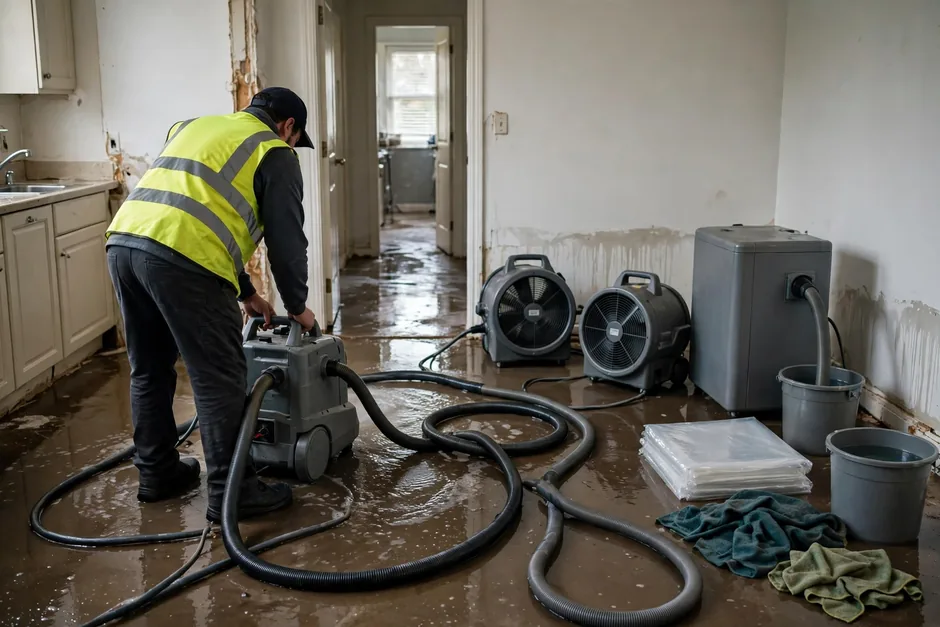
The flagship service: extraction, structural drying and repair for any water loss in Houston.
View service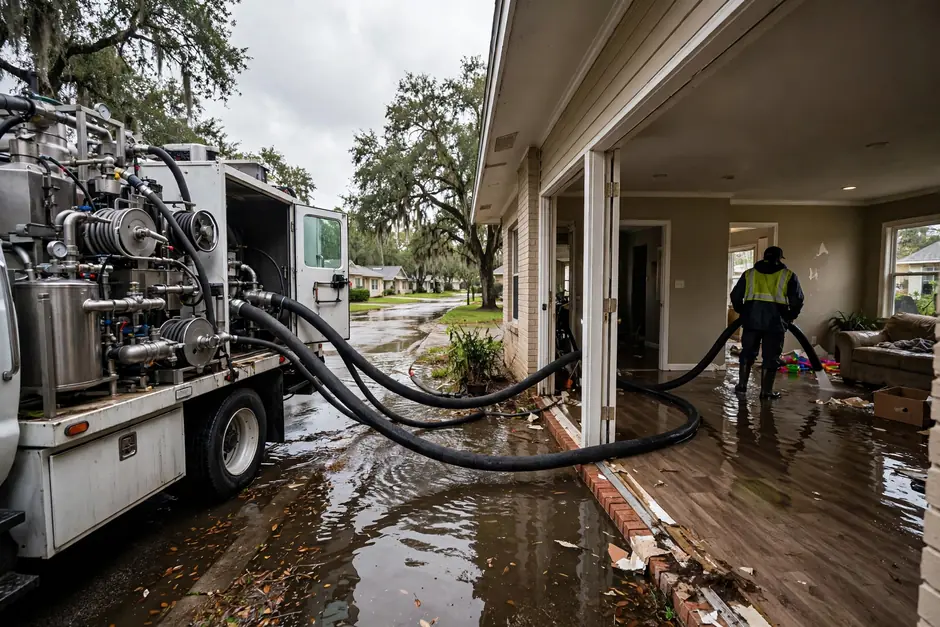
Standing floodwater comes out first with pumps and truck-mounted extraction units.
View service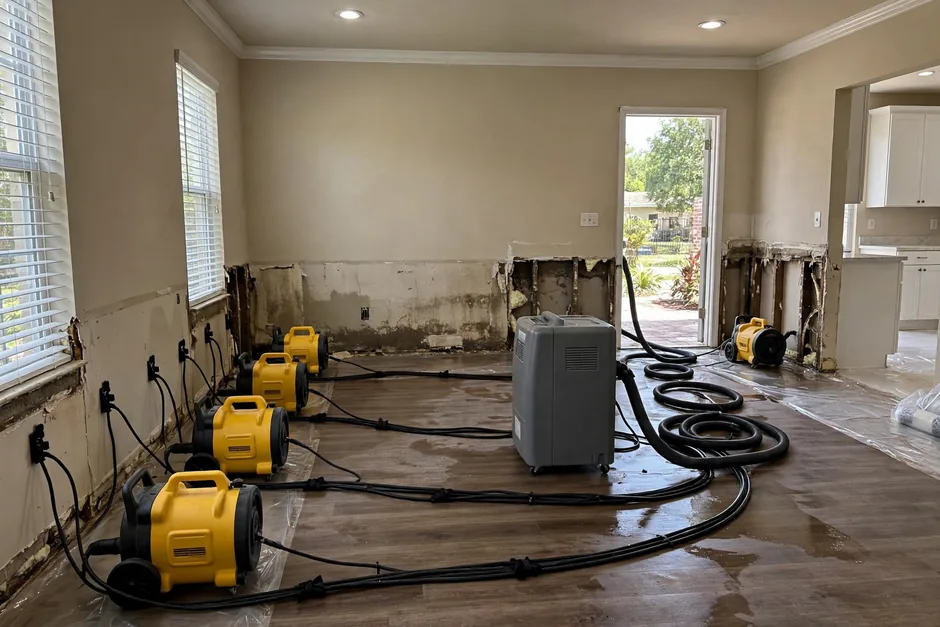
After extraction, air movers and dehumidification dry the structure to documented readings.
View service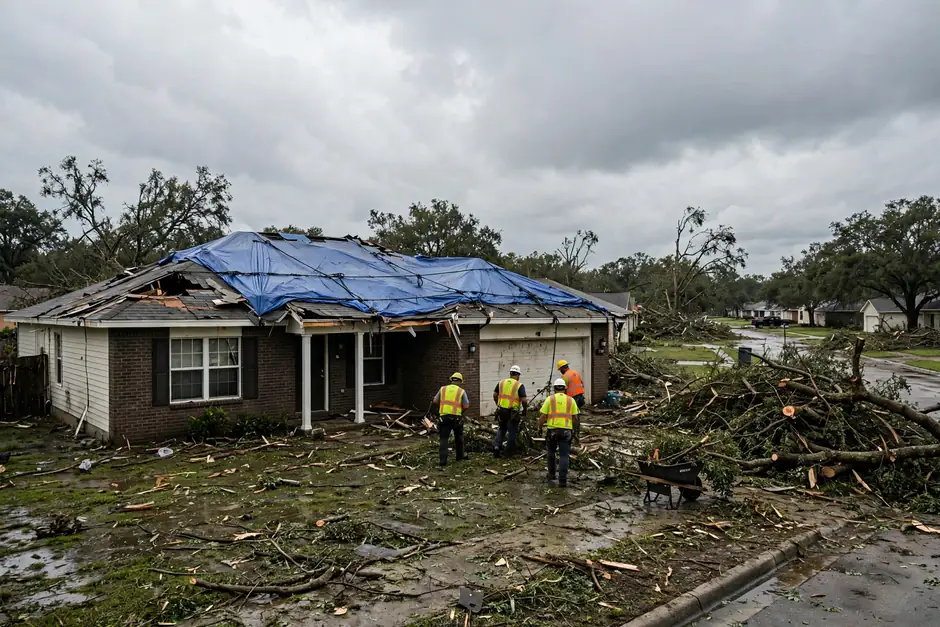
Hurricane and tropical-storm water damage — roof leaks, wind-driven rain and flooding together.
View serviceWe answer the phone around the clock, including weekends and holidays. Tell us how the water got in and how deep it is, and we will give you a clear next step. Phone is our contact channel — call (346) 980-0009.