Focused arrival windows
Useful updates and clear arrival timing.
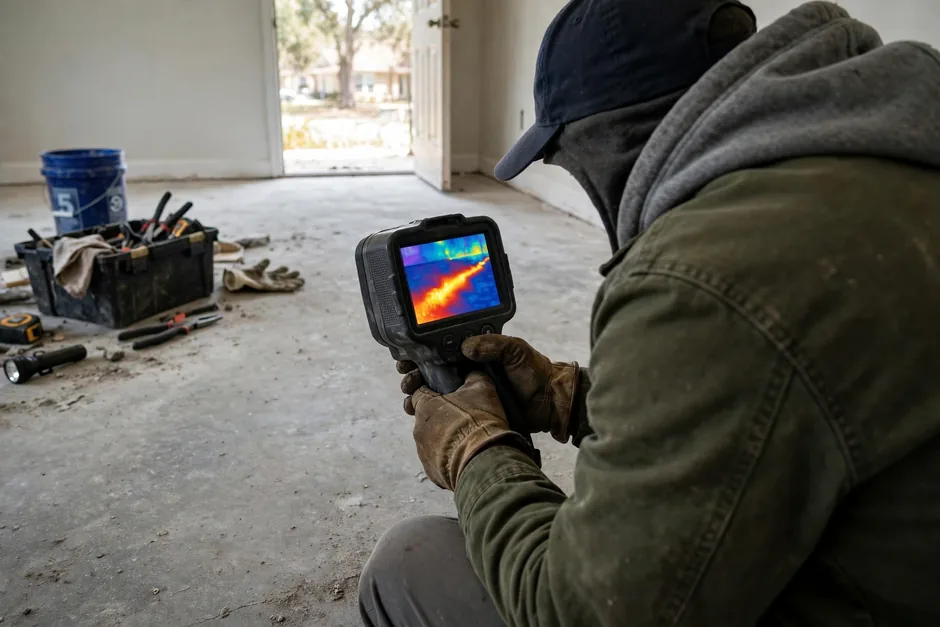
Slab leak water damage Houston homeowners deal with is easy to miss and slow to show. A supply or drain line under a slab-on-grade foundation can leak for months, pushing moisture up through tile and hardwood and into baseboards long before a puddle ever appears. Restoration Enterprise maps the wet zone with thermal imaging and moisture meters, extracts the water that has surfaced, and dries the flooring and walls to documented readings. Call (346) 980-0009 any time — we are open 24 hours.
Useful updates and clear arrival timing.
Review the approach and scope before deciding.
Equipped vehicles and respectful cleanup.
Neighbors serving neighbors with follow-through.
A slab leak is a plumbing problem underneath and a water-damage problem on top. We handle the water damage: finding where the water has traveled, removing it, and drying the home.
Thermal imaging and moisture meters map the wet zone across floors and walls, showing how far the water has traveled from the leak. We record the signs we find in writing.
Water that has surfaced through flooring is extracted with truck-mounted units, and saturated carpet and padding are removed where they cannot be dried in place.
Drying mats pull moisture from hardwood and tile assemblies, and air movers and dehumidifiers dry the slab surface, subfloor and baseboards.
Water wicks up drywall and into wall cavities. We check behind baseboards and dry the cavities, opening sections where the framing needs air.
Readings are logged from the first visit until materials reach dry standard, so you have a clear record of what was wet and when it dried.
Flooring, drywall and baseboards damaged by the water are replaced as scoped once the structure is dry, then finished to match the room.
Share what is happening and receive a clear next step from the local team.
Slab leak water damage Houston homes suffer is driven by the ground they sit on. Nearly all Houston-area homes are slab-on-grade, and the surface soil is Houston Black, a Vertisol rich in smectite minerals with a plasticity index of 30 to 60 or more. When this clay gets wet it swells 15 to 25 percent by volume, and when it dries it shrinks back. That repeated swelling and shrinking pulls joints apart, bends drain lines out of alignment and cracks copper supply lines — and the 2011 drought followed by Harvey in 2017 did more damage to under-slab plumbing than a decade of normal seasons. Slab leaks are endemic to the Houston market and often go undetected for months.
Homes built before about 1980 commonly have cast-iron drain lines under the slab, while newer homes use PVC, so the failure pattern depends on the age of the house as much as on the soil. The water itself usually starts as clean supply water or gray drain water, and it migrates through the slab and into flooring, baseboards and wall cavities rather than pooling where you can see it. The chain runs forward: emergency water extraction removes the water that has surfaced, structural drying brings the slab surface, flooring and walls back to dry standard, and mold remediation is arranged where the water sat long enough for mold to establish. The water damage restoration page describes that full sequence.
Scope boundary: a plumber repairs the under-slab line — we restore the water damage. We do not repair, reroute or tunnel to under-slab pipe, and we do not do foundation repair, which is a separate trade. We find where the water has traveled, extract it, dry the structure, and repair the materials the water damaged.
You call (346) 980-0009 and tell us what you are noticing — warm spots, running-water sounds, a bill spike, damp baseboards or cracks. We arrange a visit and explain what the inspection will cover.
We walk the home with a thermal imaging camera and moisture meter, mapping the wet zone across floors and walls and checking behind baseboards. Findings are recorded in writing with photos.
Water that has surfaced through flooring is extracted, and saturated carpet and padding are removed where they cannot be dried in place.
Drying mats, air movers and dehumidifiers dry the slab surface, flooring and wall cavities, with readings logged in writing until materials reach dry standard.
Once readings are at dry standard, damaged flooring, drywall and baseboards are replaced as scoped. We walk the job with you and hand over the final moisture report.
Shows temperature differences across floors and walls that reveal where water has traveled under the slab and into finishes.
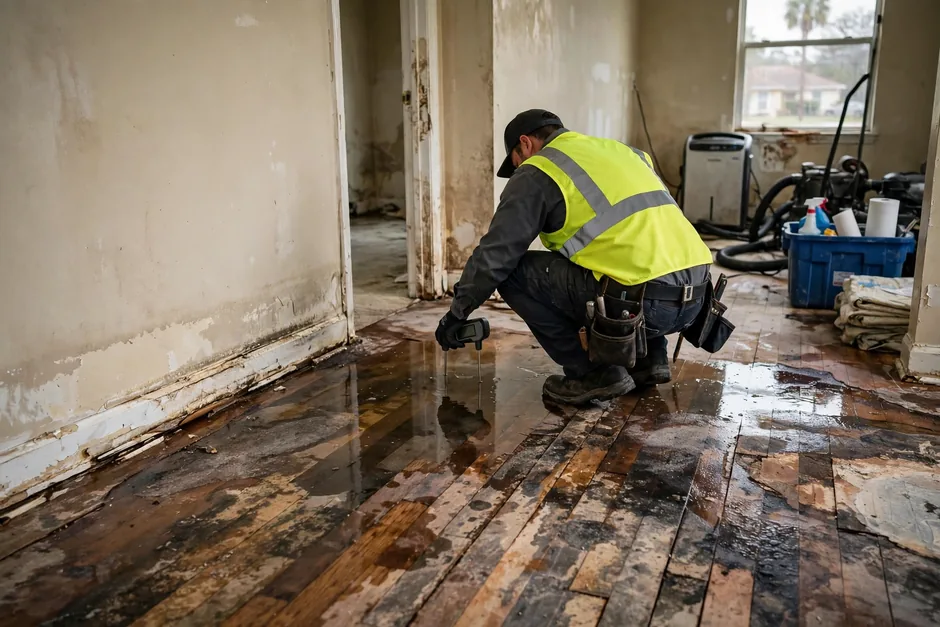
Measures moisture content in flooring, drywall and air so we know when materials have actually reached dry standard.
Pulls standing and surfaced water from tile, hardwood and carpet far faster than a portable unit.
Pull moisture out of flooring assemblies from the surface, giving the floor a chance to be dried without full removal where the readings allow it.
Move air across wet surfaces and pull moisture from the air so the slab surface, subfloor and framing can dry.
Lets us look inside wall cavities and behind baseboards to confirm hidden water and check that drying is complete.
Filters airborne particles during drying and remediation work, keeping dust out of clean rooms.
Plastic sheeting and barriers seal off the drying zone on larger jobs so equipment works efficiently.
Affected framing and cavities are treated after extraction to reduce the chance of mold while the structure dries.
ANSI/IICRC S500 is the published industry standard for water damage restoration, covering water categories, drying goals and documentation. It is an industry standard, not law, and we describe our work against it rather than claiming certification to it.
Thermal imaging maps a wet zone spreading from one area of the slab. We extract the surfaced water, dry the tile assembly and baseboards, and record the readings for the homeowner and the plumber.
Moisture readings show the subfloor is wet from below. Drying mats pull moisture from the hardwood while air movers and dehumidifiers dry the room, and the floor is monitored until readings reach dry standard.
We find water wicking up the drywall from the slab edge, open the affected section, dry the cavity and framing, and replace the damaged drywall and baseboards once dry.
We extract the surfaced water, remove porous materials that cannot be cleaned, treat the area, and dry the structure. The drain repair itself is plumbing work, handled by a plumber.
Slab leaks are a Houston-priority problem because the city combines slab-on-grade construction, expansive clay and a large stock of homes with ageing under-slab pipe. The pattern changes with the age of the house and the neighborhood it sits in.
A mix of older and rebuilt homes on slab, where cast-iron drains in pre-1980 houses and soil movement around Brays Bayou both drive slab-leak calls.
Large homes with long under-slab runs and hardwood throughout, where a leak can travel a long way before it shows.
Mid-century ranch homes on slab with original cast-iron drains in many houses, a common source of slow under-slab leaks.
Ranch homes on slab with mature oaks, where soil movement and ageing pipe meet under the same floor.
Older homes in places still on pier-and-beam sit beside slab homes, so the inspection has to match the construction rather than assume it.
Ranch homes near Brays Bayou on slab, where warm spots and damp baseboards are the usual first signs.
Larger slab homes in wooded lots, where a leak under one wing can soak flooring well away from the break.
A Vertisol rich in smectite that swells 15 to 25 percent when wet and shrinks when dry, pulling joints apart and cracking copper lines.
Homes built before about 1980 commonly have cast-iron drain lines under the slab, while newer homes use PVC — the failure pattern follows the age of the house.
A homeowner noticed a warm patch on the tile and a water bill that had jumped with no change in use. The wet zone had spread well beyond the warm patch by the time we were called.
Thermal imaging mapped the full wet zone, we extracted the surfaced water, dried the tile assembly and baseboards, and logged readings in writing until they reached dry standard. The plumber’s repair followed our mapping.
Maintenance: We recommended watching the water bill month to month and calling at the first warm spot, since a slab leak caught early wets far less flooring.
A hardwood floor in one room started cupping with no visible leak anywhere. Moisture readings showed the subfloor was wet from below.
Drying mats pulled moisture from the hardwood while air movers and dehumidifiers dried the room, and readings were logged until the floor reached dry standard. The floor was dried without full removal.
Maintenance: We suggested a moisture check under the floor after any future plumbing work, since under-slab water shows in the floor before it shows anywhere else.
Baseboards in a hallway felt damp and paint was bubbling at the bottom of the wall. The middle of the room looked dry.
We found water wicking up the drywall from the slab edge, opened the affected section, dried the cavity and framing, and replaced the damaged drywall and baseboards once readings were at dry standard.
Maintenance: We recommended checking the bottom of walls after heavy rain and plumbing work, since wicking shows at the baseboard first.
Slab leaks show up in a few recognizable ways. Each one needs mapping before any drying or repair is scoped.
A warm spot on the floor and a rising water bill point to a hot-water line leaking under the slab. We map the wet zone and dry the flooring and walls it has reached.
A cold-water leak shows as damp flooring, wicking baseboards or a bill spike with no warm spot. Moisture mapping finds the extent before drying is scoped.
Ageing cast-iron drains under pre-1980 homes can fail and let gray water surface through the slab. We extract, remove what cannot be cleaned, and dry the structure.
Hardwood that cups or tile that loosens over a wet slab needs drying from the surface down. Drying mats and dehumidifiers give the floor a chance to be saved where the readings allow it.
Water under the slab wicks up drywall and into cavities. We check behind the baseboards, dry the cavity and replace what cannot be saved.
Slab leaks reward patience and measurement. The leak is under concrete, the water travels sideways, and the visible stain is rarely the full story. Our work is built around mapping the wet zone first, then drying to documented readings and repairing what the water damaged.
Dealing with water damage is stressful, but Restoration Enterprise made the whole situation manageable. They were calm, knowledgeable, and reassuring from start to finish. I could finally breathe knowing my home was in good hands.
Exceptional Service Beyond Expectations! I am delighted to write this review for the highly professional and efficient water restoration company that turned our disaster into a blessing. When we discovered a serious plumbing issue in our kitchen, we were overwhelmed with anxiety and worry. However, the moment we reached out to them, they swiftly stepped in, assuaging our fears and promptly handling the situation. The thing that struck me the most about this company was their extraordinary customer service. They were not just professional, but also empathetic, understanding the stress we were under. They were quick to respond, arriving at our home within an hour of our call, fully equipped to deal with the situation. The cleanup process was swift and unobtrusive, causing minimal disruption to our daily routine. They even liaised with our insurance company, alleviating us from the added stress of handling paperwork. It's not often that you encounter a company so dedicated to their work and to the satisfaction of their clients. They turned an unfortunate event into a surprisingly positive experience. We are beyond pleased with the results and are grateful to have our kitchen back, in even better shape than before! If you are ever unfortunate enough to encounter a water disaster in your home, I wholeheartedly recommend this water restoration company. Their professionalism, efficiency, and dedication to customer satisfaction are second to none.
Across all 152 Google reviews, Restoration Enterprise holds a 4.7-star average: 142 five-star reviews and 10 one-star reviews. That aggregate rating is the full picture — the two reviews shown here are the only individual reviews quoted on this site.
Common signs are a warm spot on the floor, the sound of running water when nothing is in use, a sudden rise in the water bill, damp baseboards, paint bubbling at the bottom of a wall, cracks in flooring or tile, and hardwood that cups or buckles. Any one of these is worth a moisture check rather than waiting.
No. Whether flooring must be removed depends on the material, how much water it holds and what the moisture readings show. Drying mats and dehumidifiers can dry some floors without full removal. We do not promise that a floor can be saved or that it must be replaced before we have measured it.
A plumber repairs the under-slab line — we restore the water damage. The plumber may repair the line by breaking through the slab, tunnelling, or rerouting it; that work is plumbing, not restoration. We find where the water has traveled, extract it, dry the structure and repair the materials the water damaged.
Nearly all Houston homes are slab-on-grade, and the surface soil is Houston Black clay, a Vertisol that swells 15 to 25 percent when wet and shrinks when dry. That movement pulls joints apart and cracks copper supply lines. Homes built before about 1980 commonly have cast-iron drain lines under the slab, which age and fail. The 2011 drought followed by Harvey in 2017 did more damage to under-slab plumbing than a decade of normal seasons.
In general terms, a standard homeowners policy usually covers sudden and accidental water damage, while gradual leaks and wear-and-tear damage are usually excluded, and the pipe repair itself is often treated differently from the water damage it caused. What a specific policy covers depends on that policy, so check with your insurer. Our insurance claim page explains the documentation that is usually asked for.
Not seeing your question? Our local team can help you understand urgency, scheduling and what to expect.
Ask the local team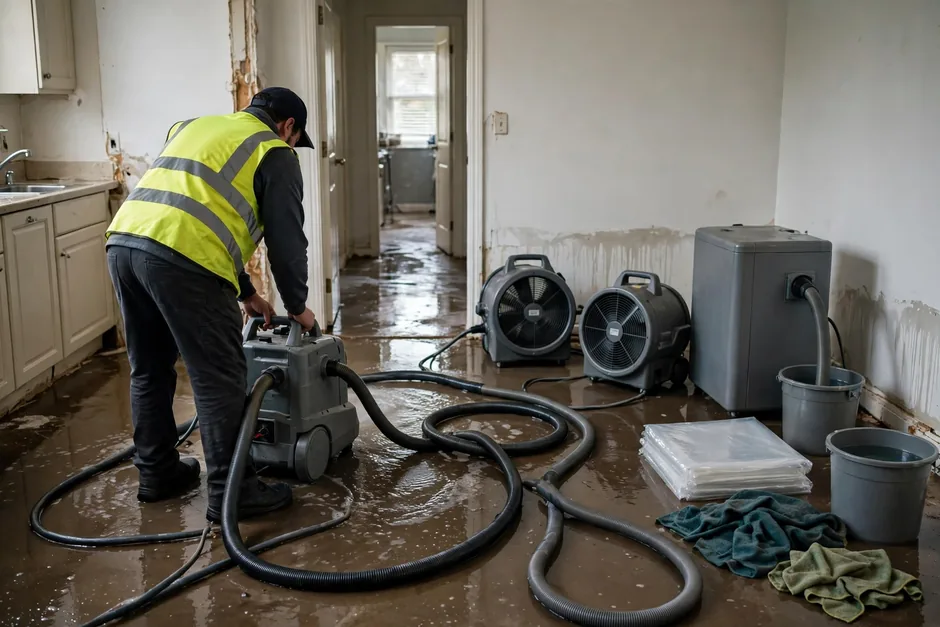
Slab leak extraction is step one; full water damage restoration covers the drying and the repair of flooring, drywall and trim once the structure is dry.
View service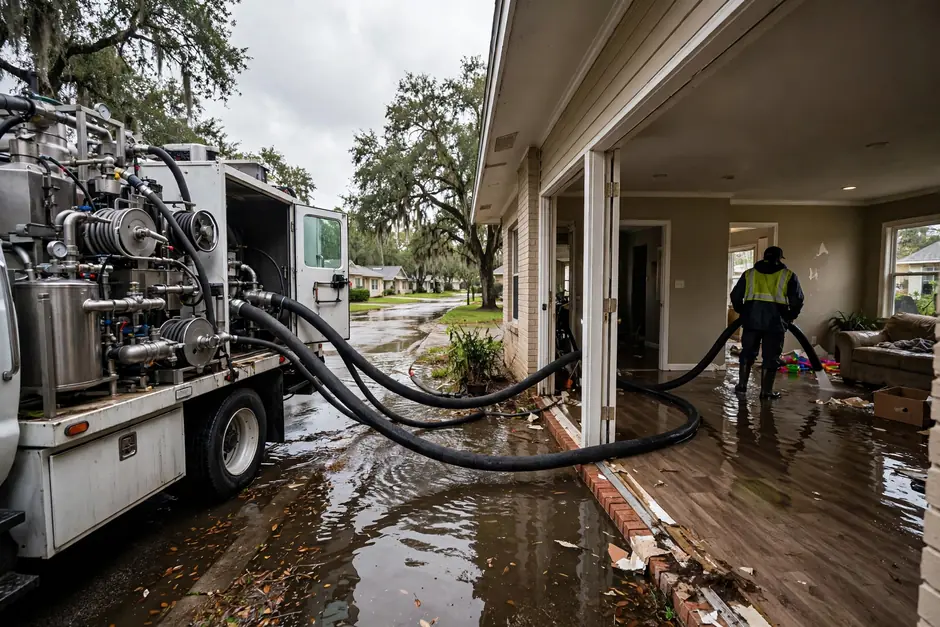
Water that has surfaced through flooring is removed with truck-mounted extraction units, then the structure is dried to documented readings.
View service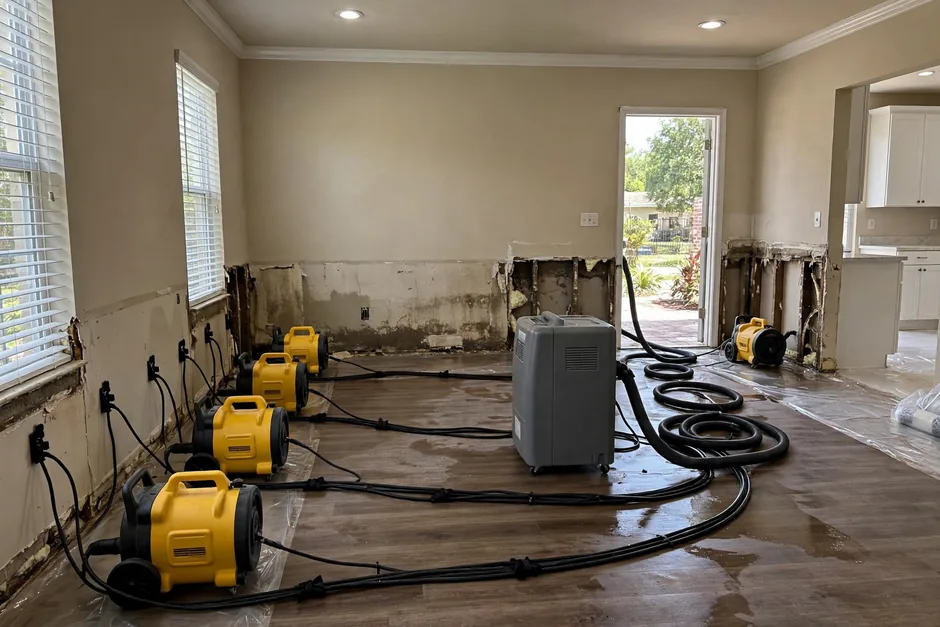
After extraction, drying mats, air movers and dehumidifiers dry the slab surface, flooring and wall cavities, with readings logged in writing.
View service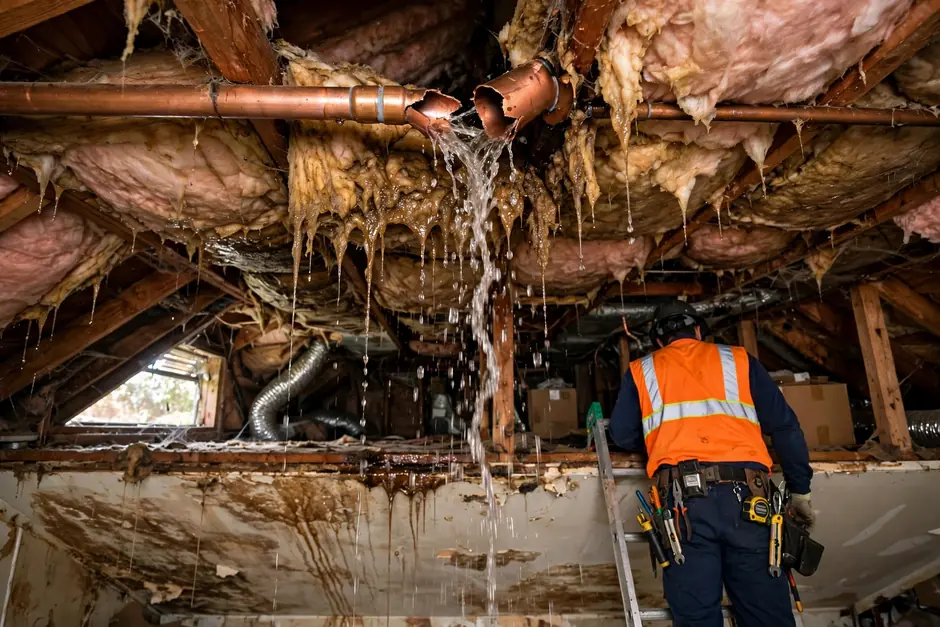
A burst supply line and a slab leak both start with a failed pipe — the difference is where the water goes and how it is found.
View serviceWe answer the phone around the clock, including weekends and holidays. Tell us what happened and where you are, and we will give you a clear next step. Phone is our contact channel.