How to Prevent Mold After Water Damage in Houston
Houston's warm, humid air is the reason mold follows water damage so quickly here. Prevention is not one step. It is a sequence: get the water out, dry the materials, keep them dry, and deal with anything that stayed wet. Here is that sequence, and where the Texas rules fit in.
Houston's warm, humid air is the reason mold follows water damage so quickly here. Prevention is not one step. It is a sequence: get the water out, dry the materials, keep them dry, and deal with anything that stayed wet. Here is that sequence, and where the Texas rules fit in.
Remove the water before anything else
Mold prevention starts with extraction, not with a spray bottle. Standing water has to come out first, and the longer it sits, the further it spreads into drywall, baseboards, flooring, and the cavities behind them. Emergency water extraction in Houston removes the liquid water that mopping and towelling cannot reach, including the water trapped under flooring and inside wall cavities.
Do not wait to see whether the water dries on its own. In Houston's humidity, it will not dry fast enough on its own, and wet materials that stay wet are where mold takes hold.
Dry the structure, not just the surface
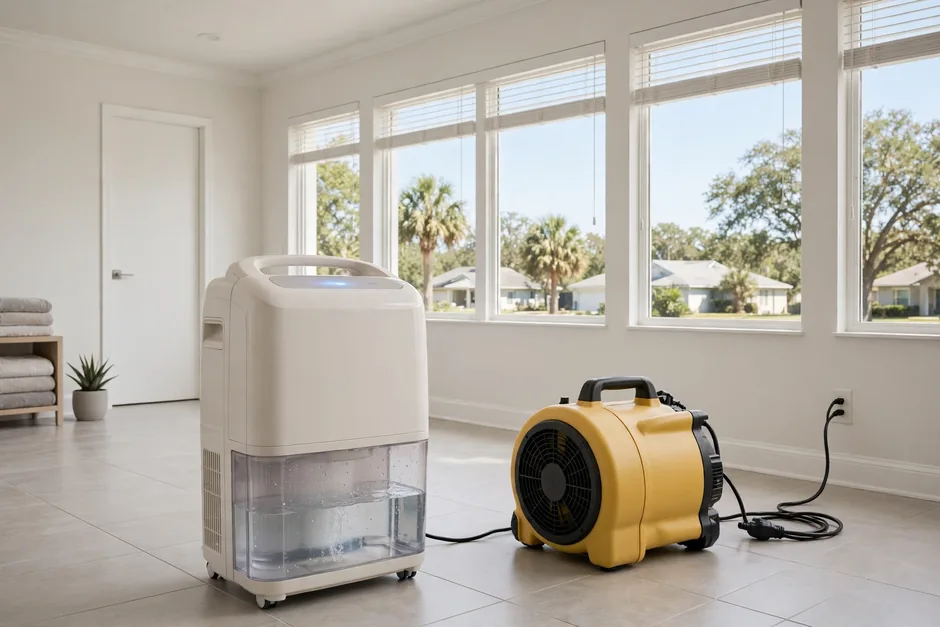
Drying means drying the materials, not just the air in the room. Drywall, wood framing, subfloor, and concrete all hold water after a leak, and they release it slowly. Structural drying and dehumidification in Houston uses air movers and dehumidifiers to pull moisture out of those materials, with moisture meters tracking the readings until they are dry.
A room can feel dry while the wall cavity behind it is still wet. That is why the drying plan has to measure inside the walls and under the floor, not just in the open air. In River Oaks, where older homes have plaster walls and deep framing, hidden moisture is a common surprise after a leak that looked small from the outside.
Remove what cannot be dried
Some materials cannot be dried in place and should be removed: soaked insulation, swollen particleboard, saturated carpet pad, and drywall that has been wet for a long time. Keeping them in place to save money is the most common way a mold problem starts after the visible water is gone. A flood cut, the removal of the lower section of wet drywall, is the standard approach after floodwater for exactly this reason.
Our water damage restoration in Houston work treats removal as part of prevention, not as a failure. Taking out a wet section of wall is cheaper than remediating mold across a whole room later.
Keep humidity down while the home dries
While the structure dries, keep the home's humidity down. Run the air conditioning, keep the dehumidifier running if one is in place, and avoid adding moisture: no mopping of wet areas, no steam cleaning, no drying laundry indoors near the affected rooms. Houston's outdoor humidity is high for much of the year, so opening windows does not dry a wet house. It brings more humid air in.
Watch for the early signs that drying is not keeping up: a musty smell that returns after the room feels dry, paint that bubbles, baseboards that pull away from the wall, or a floor that feels cool and damp. Any of those means moisture is still present somewhere.
Know the Texas rule before mold work starts
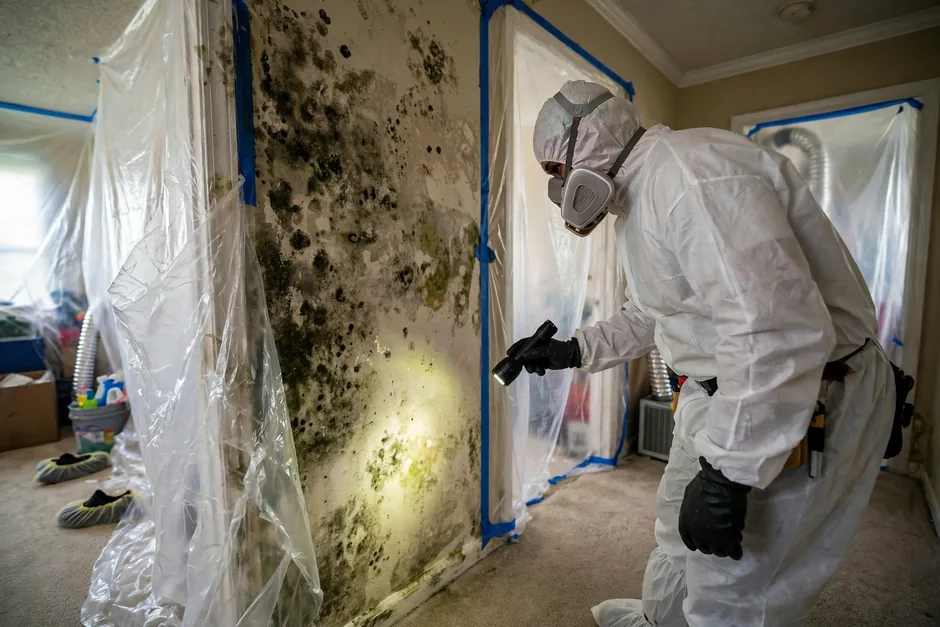
In Texas, mold remediation of 25 contiguous square feet or more requires a TDLR-licensed remediator, and the company that assesses the mold cannot remediate the same job. IICRC S500/S520 are industry standards, not law. Mold assessment is a separate licensed activity from remediation, and mold inspection and testing are not the same as remediation. If a job involves mold over the threshold, the assessment and the remediation must be handled by separate parties, and the job carries a paper trail: an assessment protocol, a work plan, notification, and clearance by the assessor when the work is finished.
There is no safe level of mold in the Texas rules, and no honest company promises a mold-free home. What prevention can promise is a dry structure, removed material where drying was not possible, and a verified scope of work. Our mold remediation in Houston page explains how the assessment and remediation roles are kept separate.
After the drying: what to watch for
Once the structure is dry, keep watching the spot for a few weeks. Check the wall for new staining, the floor for swelling, and the room for a returning smell. If the leak source was a roof failure, have the roofing trade confirm the repair. If it was plumbing, have the plumber confirm the fix. Restoration deals with the water damage; the trade that caused the leak repairs the cause.
If mold does appear, do not paint over it and do not scrub a large area yourself. Containment matters, and disturbing a large area of mold without it spreads the problem through the house. Get a proper assessment and a written scope before any work starts.
Frequently Asked Questions
How do I prevent mold after water damage in Houston?
Extract the water, dry the structure with air movers and dehumidifiers while moisture meters track the readings, remove materials that cannot be dried, and keep humidity down while the home dries. Fix the water source so the problem does not repeat.
How fast can mold grow after water damage?
Quickly in Houston's warm, humid air, which is why wet materials should not be left to dry on their own. The longer materials stay wet, the greater the chance mold takes hold, so extraction and drying should start as soon as it is safe to do so.
What is the 25-square-foot rule in Texas?
In Texas, mold remediation of 25 contiguous square feet or more requires a TDLR-licensed remediator, and the company that assesses the mold cannot remediate the same job. IICRC S500/S520 are industry standards, not law. Mold assessment is a separate licensed activity from remediation.
Should I open windows to dry out water damage?
No. Houston's outdoor air is humid for much of the year, so opening windows brings more moisture in. Drying uses air movers and dehumidifiers with the home closed up, so the equipment can pull moisture out of the materials.
When should I call a professional about mold?
Call when the wet area is large, when water has been sitting for a while, when you can smell mold but cannot see it, or when wet drywall, insulation, or flooring needs to be removed. If the area is over the Texas threshold, a licensed remediator and a separate assessor are required.
Water damage in your Houston home
Do not give mold a head start. Call Restoration Enterprise at (346) 980-0009. We extract the water, dry the structure, and check the hidden moisture so the job is finished properly.
Sources
Sources for the rules and figures cited in this guide.
- Texas Department of Licensing and Regulation — Mold Remediation: Frequently Asked Questions — the Texas mold-remediation rules, including the 25-contiguous-square-feet threshold and the rule that the company that assesses the mold cannot remediate the same job.
- ANSI/IICRC S520 — Standard for Professional Mold Remediation — the industry standard for professional mold remediation.